Business

Officers visit areca godowns, ask merchants not to use chemicals during processing
A team of officers led by Shivamogga sub-division Assistant Commissioner H.P.S. Mythri conducted surprise inspections at areca godowns in Bullapura, on the outskirts of the city, on Monday and collected samples to check whether chemicals had been used during processing. The exercise followed complaints that areca merchants were using chemicals to enhance the colour and shine of the nuts. Several truckloads of areca were recently seized in neighbouring Maharashtra over similar concerns. Ms. Mythri told the merchants that the use of chemicals could pose serious health hazards to consumers, besides hurting the market for local areca growers in the long run. She warned that farmers would face heavy losses if the region’s produce lost its reputation in the market because of chemical use. The officers collected samples from the godown for laboratory testing. Ms. Mythri said the district administration would take action against those concerned if the tests confirmed the use of chemicals. She urged farmers and merchants to ensure proper processing of areca without resorting to chemical treatment. The team included Tahsildar V.S. Rajiv, among others. Officials of the Revenue Department have been conducting surprise inspections of roadside eateries and hotels in the city to check the quality of food served and hygiene standards. The team recently ordered the closure of two juice shops in the city.
More top stories
Jaxson Dart Net Worth 2026: Giants QB's Salary, Contract And Career Earnings
Jaxson Dart's net worth in 2026 is estimated at $5 million. The Giants QB holds a fully guaranteed $16.97M rookie contract. Here's a breakdown of his salary, cap hit, career earnings, and what drives his growing financial profile.
Jalen Hurts Shares What He Relies On When Philadelphia Eagles Face Their Biggest Moments
Jalen Hurts opened up on what he relies on when the Philadelphia Eagles face their biggest moments, pointing to preparation, trust and teamwork.

Are GLP-1s causing blindness? Novo Nordisk, Eli Lilly face lawsuits in US
The condition, known as nonarteritic anterior ischemic optic neuropathy (NAION), affects the optic nerve and can cause sudden, painless loss of vision.
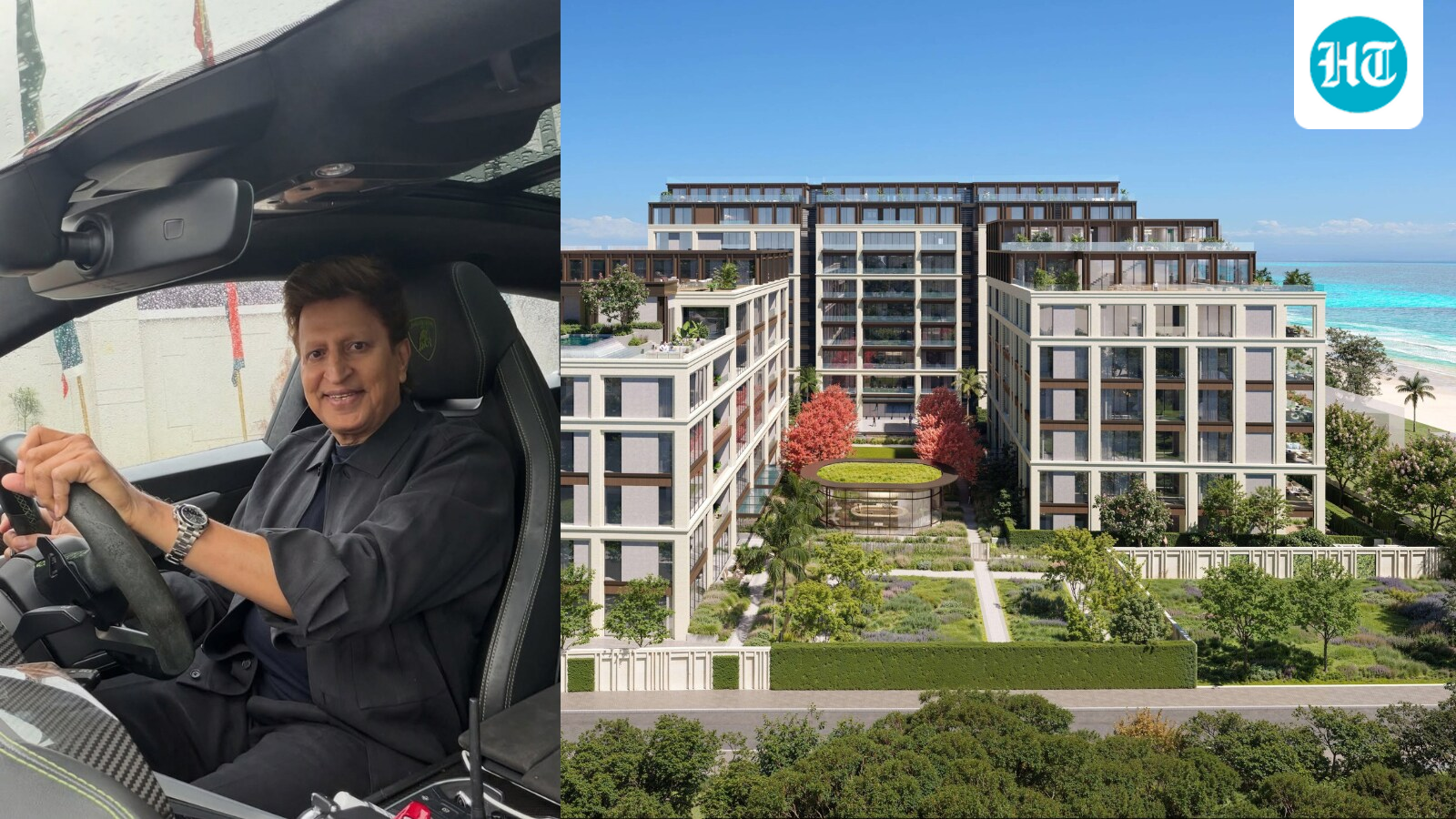
Who is Dinesh Thakkar? Tycoon who bought Mumbai tower for ₹711 crore in record home deal
Angel One Ltd.'s Dinesh Thakkar bought a luxury residential tower in Mumbai for ₹711 crores, making it India’s costliest single property.
Startup news and updates: daily roundup (September 22, 2026)
YourStory presents the daily news roundup from the Indian startup ecosystem and beyond. Here's the roundup for Tuesday, September 22, 2026.
FM to corporates: Resolve disputes before litigation
Finance Minister Nirmala Sitharaman urged Indian corporates to strengthen internal governance, engage constructively with regulators and resolve disagreements before resorting to litigation. She also called for higher private-sector R&D spending, stronger management capabilities, resilient institutions and more inclusive business models to support India’s growth towards Viksit Bharat by 2047.

Rajasthan CET 2026 exams rescheduled over local body polls, 40 lakh aspirants affected: Check revised dates
Rajasthan CET 2026 candidates who have registered for the examinations should take note of the revised schedule and plan their preparation accordingly.
Nscale’s IPO will test Wall Street’s appetite for concentrated AI bets once again
The British AI data center developer depends on tech giants Microsoft and Anthropic for most of its revenue.

Petition seeks end to Electronics City flyover toll after concession period ends
The nearly 10-km Electronics City Flyover, located along Hosur Road between Bommanahalli near the Central Silk Board and Electronics City, was initiated in 2006 and inaugurated on January 22, 2010.

Bay of Bengal depression likely to intensify, hit Andhra-Odisha coast
The weather system comes as the southwest monsoon begins its annual withdrawal from northwest India.

Zoho Sridhar Vembu warns engineers over AI coding: ‘Driving too fast in a fancy new car'
In a post on X, Sridhar Vembu said engineers should make use of AI tools but continue to exercise their own technical judgement and understand the work being produced.
India’s new plan for fastest bullet train
India is moving towards developing its own next-generation bullet trains, with the proposed B35 high-speed train being designed for speeds of up to 350 kmph by 2030. The plan comes even as the country prepares to test its first indigenous B28 bullet trains, which are expected to begin trials in 2027. The B35 programme is part of India's broader push to build domestic capabilities in high-speed rail technology. The proposed trains are expected to serve future high-speed rail corridors being planned across the country. India’s B35 bullet train to target 350 kmph The proposed B35 is an indigenous high-speed train with a design speed of 350 kmph. The National High Speed Rail Corporation Limited (NHSRCL) has already initiated a capability assessment for developing the train. Read more - NHAI’s new rules: No median cuts or surface-level intersections on future high-speed NH corridors; exits to be marked 5 km, 2 km, 1 km and 500m ahead The B35 is being planned for India's future bullet train corridors, including Mumbai-Pune, Pune-Hyderabad, Hyderabad-Bengaluru, Hyderabad-Chennai, Chennai-Bengaluru, Delhi-Varanasi and Varanasi-Siliguri. Live Events The development of a 350 kmph train would place India's proposed high-speed rolling stock in the same broad speed category as Japan's next-generation E10 trains, which are scheduled to enter production in 2030, according to reports. As per TOI, the railway ministry informed the Cabinet that it had started work on developing B35 trains after Japan said in December 2024 that production of its existing E5 series was being phased out. Japan also indicated that production of the next-generation E10 trains would begin in 2030, with the trains expected to enter service by 2034. B28 bullet trains to arrive before B35 Before the B35, India is preparing to manufacture and test the B28, its first indigenous high-speed train. State-owned BEML is manufacturing the B28 trainsets at its Aditya High-Speed Rail Complex in Bengaluru. The facility was inaugurated in April 2026 and is dedicated to high-speed rail manufacturing. The B28 has a design speed of 280 kmph, while its maximum operating speed is expected to be 249 kmph. Two prototype trainsets are expected to be ready for trial runs in the first quarter of 2027. BEML has already secured contracts covering 47 B28 trainsets. This includes an earlier contract for 32 trainsets and a separate order worth around Rs 5,400 crore for additional high-speed rolling stock and associated works for the Mumbai-Ahmedabad corridor. Mumbai-Ahmedabad bullet train project crosses Rs 2 lakh crore The development of indigenous bullet trains is closely linked to India's first high-speed rail project, the 508-km Mumbai-Ahmedabad High-Speed Rail corridor. The project's revised cost has risen to more than Rs 2 lakh crore, nearly twice the original estimate of around Rs 1.1 lakh crore. The revised estimate reflects significant increases in areas including land acquisition, infrastructure and high-speed rail systems. The entire Mumbai-Ahmedabad corridor is targeted for completion by December 2030, while an initial section is expected to become operational in 2027. The corridor will initially use B28 trainsets, while future indigenous trains such as the B35 could support the expansion of India's high-speed rail network. India to develop its own train control system Alongside indigenous bullet trains, India is also working on domestic train-control technology for high-speed rail. The proposed Bharat Train Control System (BTCS) is intended to provide train control and signalling capabilities for high-speed railway operations. The technology is being developed as part of the broader effort to build domestic expertise across the high-speed rail ecosystem. High-speed trains require sophisticated signalling and train-control systems to manage speed, train spacing and safe operations, particularly at very high speeds. Why manufacturing a 350 kmph bullet train is challenging Developing a high-speed train involves considerably more than increasing the power of the train. At speeds approaching 350 kmph, the train body, suspension, wheels, braking systems and onboard control technology all need to work together to maintain stability and passenger comfort. India's indigenous trains are also being developed with local operating conditions in mind. Unlike trains designed primarily for colder climates, Indian high-speed trains need to account for the country's heat, dust and other environmental conditions. BEML's Aditya facility in Bengaluru has been established specifically to develop this high-speed rail capability. The government has described the development of indigenous high-speed trains as a significant engineering challenge and an important step towards building domestic expertise. Seven more bullet train corridors planned The Mumbai-Ahmedabad corridor is only the beginning of India's planned high-speed rail network. Seven additional corridors have been identified for development. These include: Mumbai-Pune Pune-Hyderabad Hyderabad-Bengaluru Hyderabad-Chennai Chennai-Bengaluru Delhi-Varanasi Varanasi-Siliguri via Patna The proposed network would expand India's high-speed rail footprint beyond the Mumbai-Ahmedabad route and create potential demand for domestically manufactured trainsets. B35 bullet train: What lies ahead India's high-speed rail programme is therefore moving on two tracks, the immediate development of B28 trains for the Mumbai-Ahmedabad corridor and the longer-term development of the faster B35. While B28 prototypes are expected to enter trials in 2027, the proposed B35 aims to take India's indigenous high-speed train technology to a design speed of 350 kmph by 2030. If the programme progresses as planned, India could have a domestic high-speed train manufacturing ecosystem capable of supporting multiple bullet train corridors in the coming years. Inputs from TOI Add as a Reliable and Trusted News Source Add Now! (You can now subscribe to our Economic Times WhatsApp channel)
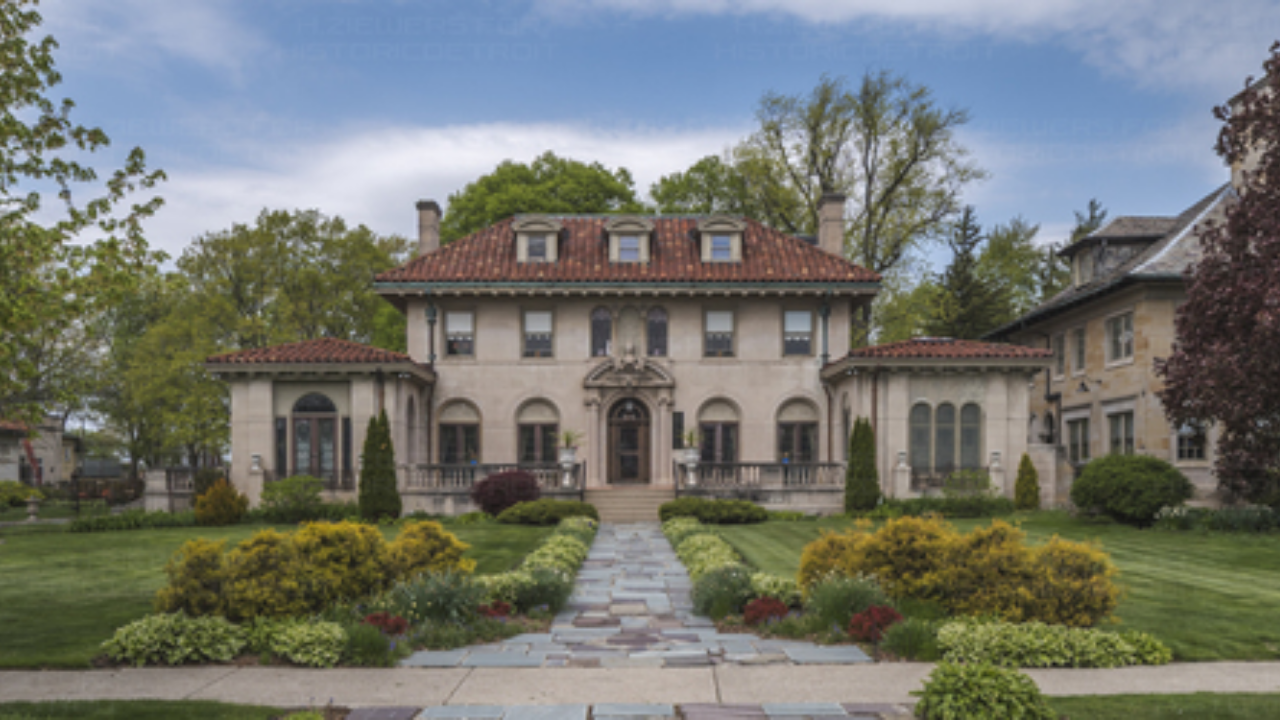
Detroit lawyer bought Motown mansion for $250,000, sold it for $1.65m
A century-old Detroit mansion with deep ties to the city’s music and industrial history once changed hands for just $250,000 before a painstaking restoration helped it sell for $1.65 million. Known as the Motown Mansion, the 10,500-square-foot residence at 918 W. Boston Blvd. was built in 1916-17 for lumberman Nels Michelson and later became the home of Motown Records founder Berry Gordy Jr. Historic Detroit identifies the property as the Nels Michelson Mansion and documents its origins, architecture and notable owners. Gordy bought the house in 1967 and lived there during a pivotal period for Motown before eventually selling it to Detroit attorney Cynthia F. Reaves, who restored the landmark and later sold it in 2017.
Stockbroking Tycoon Buys Mumbai Tower For Over Rs 700 Crore In Record Home Deal
The deal reflects a boom in India's luxury housing market as growing wealth and the listing of firms from smaller cities swell the ranks of the country's rich

Arnab intensifies: When will depression hit Andhra-Odisha coasts? Which areas to be most affected? IMD update
IMD on Tuesday said the low-pressure area over the Bay of Bengal had intensified into a depression and was likely to become a deep depression within the next 10 hours.
Meta deal will help plastics recycling startup MacroCycle build its first factory
Meta is giving plastic recycling a boost in a new deal with startup MacroCycle, which is building its first commercial plant.