International

UNGA 2026 LIVE Updates: Guterres says world’s fault lines are ‘widening’ in last speech at UN General Assembly
UNGA 2026 LIVE Updates: World leaders gather in New York City to attend annual United Nations General Assembly (UNGA) meeting, where US war on Iran, Russia’s war on Ukraine and risks of artificial intelligence are expected to dominate discussions.
More top stories
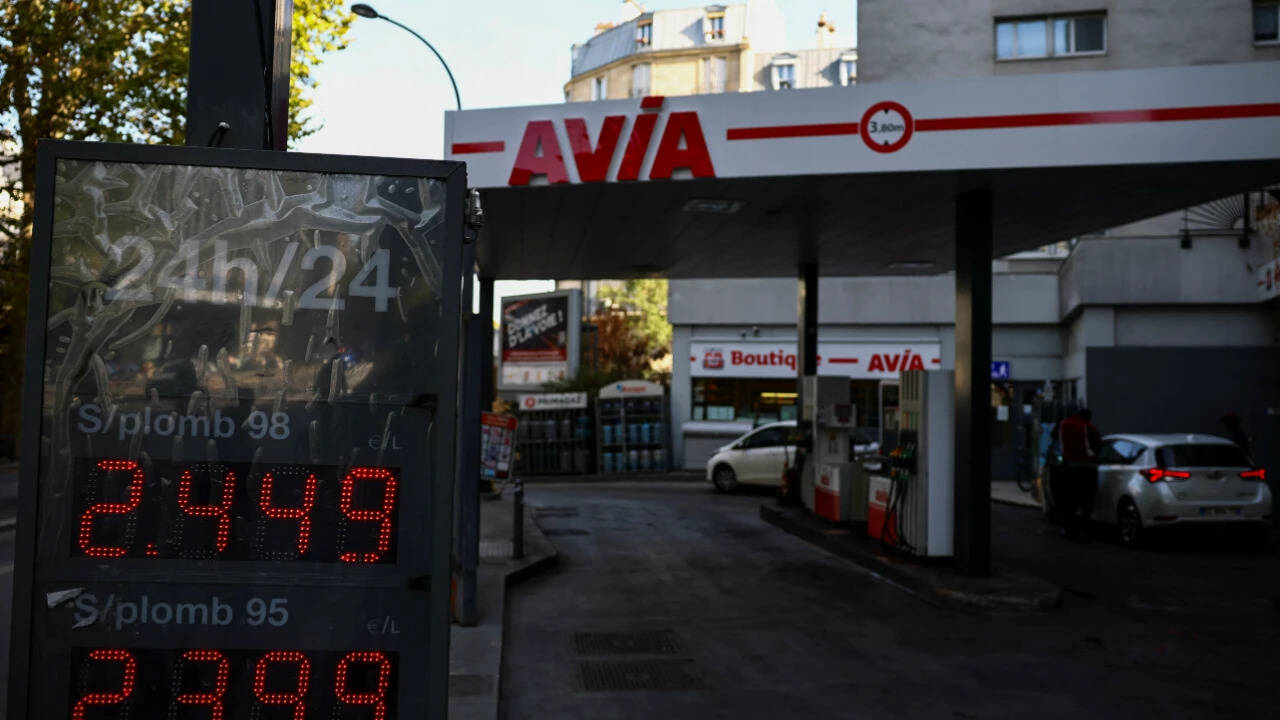
Diesel prices hit records as Iran, Ukraine wars disrupt fuel supplies
Diesel prices have surged to record levels in Europe and the United States as wars in Iran and Ukraine disrupt supplies from major producers and damage refineries, leaving limited options to prevent further gains.European diesel futures closed at an all-time high last week, having more than doubled from the start of 2026. Supply disruptions have also spread to the Red Sea, where Saudi Arabia loads most of its diesel.In the US, average retail diesel prices crossed $6 a gallon for the first time on record this month. In Asia, benchmark diesel prices have also remained close to record levels amid disruptions to Middle Eastern and Russian supplies. Refinery disruptions deepen global diesel squeeze The wars in the Middle East and Ukraine have damaged refineries, while facilities elsewhere have been operating at high levels to make up for lost fuel supplies.US refineries were running at their highest level in eight years in late August, according to the International Energy Agency (IEA)."A key issue is that many refineries around the world are already stretched to capacity," the IEA said in a newsletter on Monday. "This leaves few available options to prevent a further tightening of supplies and higher prices in the coming months."Middle East diesel exports fell by half between March and August compared with a year earlier, averaging 800,000 barrels per day, according to shipping data from Kpler. The region supplied nearly 41% of Europe's diesel imports in 2025."Any further disruption to Red Sea flows risks tightening an already stretched global diesel market," Kpler analyst George Shaw said, as cited by Reuters.Shaw added that refining capacity remained a key constraint. Russia's refinery attacks hit diesel exports Russia, the world's second-largest diesel exporter after the US, banned diesel exports in July after Ukrainian drone attacks reduced refinery production.Russia and Ukraine have continued attacking each other's energy infrastructure despite an announcement by US President Donald Trump last week that they had agreed to stop. Ukrainian President Volodymyr Zelenskyy said on Sunday that he would meet Trump in the coming days.Russia had supplied significant volumes of diesel to countries including Turkey and Brazil before the ban, prompting importers to seek alternative supplies.In Europe, diesel stocks at the Amsterdam-Rotterdam-Antwerp refining and storage hub were at their lowest level for this time of year on September 10, according to Insights Global. US diesel stocks remain below seasonal levels US diesel inventories also remain below normal seasonal levels despite high refinery utilisation. Stocks rose by about 600,000 barrels last week but stood at 96.97 million barrels, nearly 15% below the five-year average for the second week of September.Average US diesel prices reached a record $6.52 per gallon on Monday, according to the AAA Automobile Association.In France, the average diesel price reached a record €2.41 per litre on Sunday, according to an AFP analysis. Asia prices remain near record levels Asian diesel prices have also risen sharply because of disruptions to Middle Eastern and Russian supplies. The benchmark diesel swaps price had eased from a March record of more than $200 a barrel but remained around $180 a barrel on September 18.Current levels are still about twice their pre-war values.China's diesel exports fell 26% in April-June from a year earlier after the government limited refined-product exports, tightening global supplies.Exports subsequently recovered to around 320,000 barrels per day in August, their highest level in nearly 2.5 years, while domestic stocks declined. Few quick options to ease fuel prices The disruptions have created limited short-term options for increasing diesel supplies. Rystad Energy vice-president Janiv Shah said some unused refining capacity existed on paper but that little could be activated quickly and supplied with the appropriate crude.A resumption of oil shipments through the Strait of Hormuz would likely be the quickest way to ease prices, Shah said, as it would allow Asian refineries to receive supplies.IEA oil industry and markets division head Toril Bosoni warned that if Gulf supplies remained constrained and commercial inventories continued to fall rapidly, higher prices and further reductions in demand could be needed to close the supply-demand gap.Shah said higher prices could reduce diesel consumption, but the short-term effect would be limited because trucking, agriculture, construction and industry have few immediate alternatives.
Heavy Rain Alert In Nepal Month After Devastating Flash Floods
Some areas of the two provinces could also receive extremely heavy rainfall during the September 25 to 27 period, according to the department's Weather Forecasting Division.
Trump-GCC Summit in New York: What does each side want?
Trump will meet with leaders from Saudi Arabia, the UAE, Qatar, Bahrain, Kuwait and Oman on the sidelines of UNGA.
Can the US ban Iranian airlines worldwide – and what would it mean?
Analysts say new sweeping US sanctions stand to worsen lives of millions of Iranians struggling in battered economy.
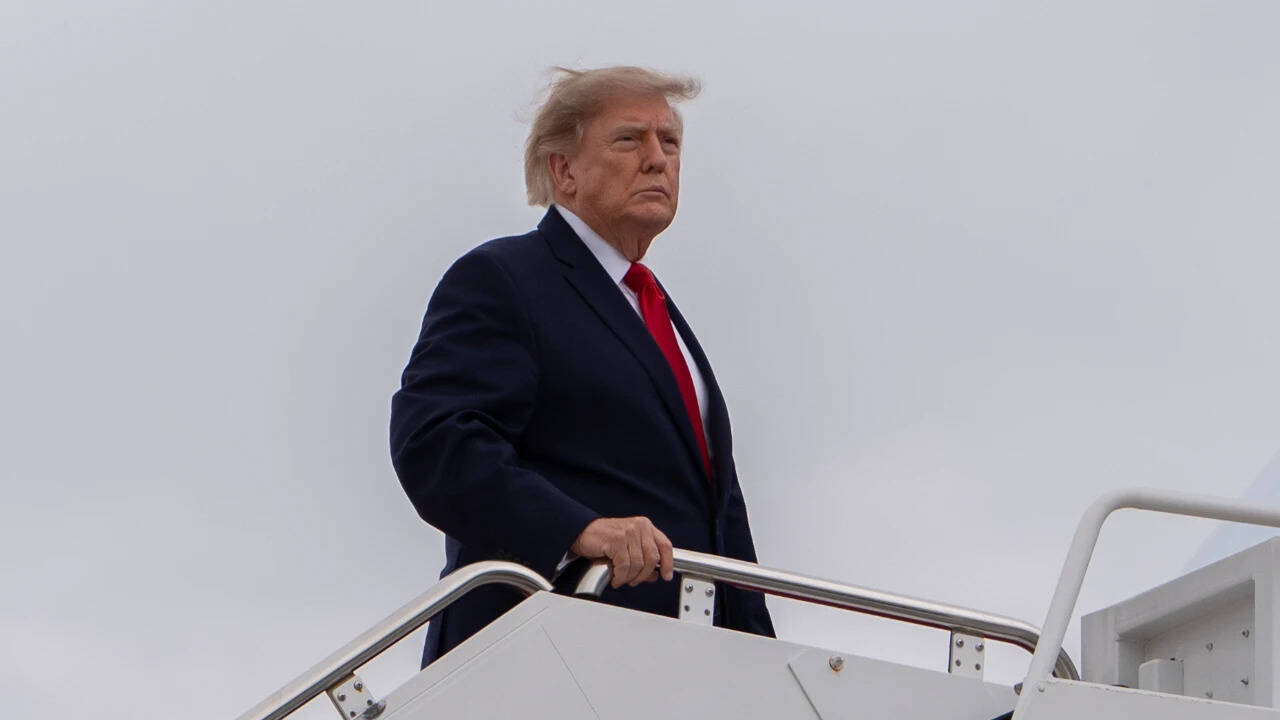
Trump's double standards: Russian oil bad for India, Belarusian potash good for US?
Trump administration faces flak from critics over Belarus potash deal amid pressure on India over Russian energy TOI correspondent from Washington: Critics are calling out the Trump administration for hypocrisy and double standards after MAGA supremo Donald Trump announced a potash (fertiliser) deal on Monday with Belarus, a close ally of Moscow, days after he signed a bill which would punish India if it buys Russian energy.Arising from his spat with Canada, which supplies 85 per cent of US-needed potash, a key farming input, Trump announced with his customary fanfare that Washington is working on a “massive Deal” to purchase potash from Belarus at prices “substantially less” than what Washington currently pays Ottawa, calling it good news for American farmers. The move will affect New Delhi because Belarus is also an established supplier of potash to the Indian agricultural market. The apparent double standard is already drawing flak in diplomatic circles. Evan Feigenbaum, a former administration official and a South Asia analyst, has pointed to the contradiction between Washington’s pressure on India over Russian energy and Trump’s willingness to pursue Belarusian potash and said the appearance of “double standards and apparent hypocrisy” can affect perceptions of the US as a negotiating partner. But as has become normal with many announcements by the MAGA boss, he appears to have jumped the gun on the issue – if he's not posturing – because Belarusian President Alexander Lukashenko said there was little or no spare potash available for western markets and his country’s production was already contracted. “Even if we wanted to supply other markets we simply don’t have the volume,” Lukashenko said, according to reports from Minsk.Potash is not quite oil or gas, but in agriculture it has a comparable strategic character. Potassium is one of the three major plant nutrients, alongside nitrogen and phosphorus. It helps regulate water uptake, photosynthesis and enzyme activity and improves crop quality, disease resistance and yields.And the global concentration is striking. Canada, Russia and Belarus are the dominant players in the international potash market. Canada alone accounts for about one-third of global supply and is by far the principal supplier to the US Trump's gambit therefore amounts to using a trade war with one major supplier to seek leverage through another supplier that happens to be aligned with a notional geopolitical adversary who is frequently helped through the backdoor.This is because Belarus is landlocked, and European sanctions have restricted its traditional export routes. So any significant new flow of Belarusian potash to the US would face complicated logistics and could require transit through infrastructure and ports of Russia, the very country Trump is trying to squeeze in an effort to end its war with Ukraine.For New Delhi, the question is not simply whether Trump can secure cheaper potash for American farmers; it is whether Washington – by rearranging the global fertilizer market for its own agricultural survival amid a cratering of ties with Canada – ends up making Indian farmers pay more.India requires roughly 4-5 million tonnes of potash a year and is among the world's largest importers. Although India's supply is now diversified among Canada, Russia, Israel, Jordan and others, Belarus is an important source.
Iran ready to reopen Strait of Hormuz if...
Iran can reopen the Strait of Hormuz within seven days if the United States eases military pressure and lifts its blockade on Iranian ports, a senior Iranian official told Reuters on Tuesday. On Sunday, Iran's military central command said it was informed the US was preparing to restart military operations with the support of regional countries, and warned this would lead to Tehran's retaliation "without limitations and considerations". "The US needs to announce that it wants to resolve the issue diplomatically, make that official, and then agree on a timeline for how the process will move forward", the senior Iranian official said, adding the Iranian delegation to the United Nations General Assembly is in New York and has full authority to revive diplomacy with the United States. Iran's President Masoud Pezeshkian, who left Tehran for New York on Tuesday morning, will not meet U.S. President Donald Trump at the UN headquarters in New York, the official told Reuters. The Iranian official said details on an agreement to end hostilities with Washington can be discussed in New York via mediators, explaining that Tehran's proposal was delivered to the US via mediators on September 16. Live Events "The UN General Assembly is a golden opportunity for the US to return to diplomacy", the official said, adding that Tehran would welcome a revival of diplomacy if Washington takes tangible steps. Add as a Reliable and Trusted News Source Add Now! (You can now subscribe to our Economic Times WhatsApp channel)

Bangladesh Foreign Secretary Asad Alam Siam to be the next High Commissioner to India
The development comes in the backdrop of negotiations between New Delhi and Dhaka for a possible India visit by Prime Minister Tarique Rahman sometime in November.
'Trump's media ban faces long odds in court'
US President Donald Trump’s decision to bar CNN, MSNOW and Politico from the White House over coverage he called “FAKE NEWS” is facing a legal challenge. The outlets allege retaliation for protected speech and due-process violations, while legal experts cited by Reuters say viewpoint-based restrictions on press access could violate the First Amendment.
Why United Nations says US boat strikes may be ‘crimes against humanity’
Washington justifies the attacks as necessary to halt the flow of lethal drugs into the US.

Bangladesh picks Foreign Secretary Asad Alam Siam as next envoy to India: What it means for ties
Bangladesh Foreign Secretary Asad Alam Siam has been approved as the next High Commissioner to India, as New Delhi and Dhaka seek to reset strained ties. His appointment comes amid tensions over Sheikh Hasina’s presence in India and other bilateral issues.
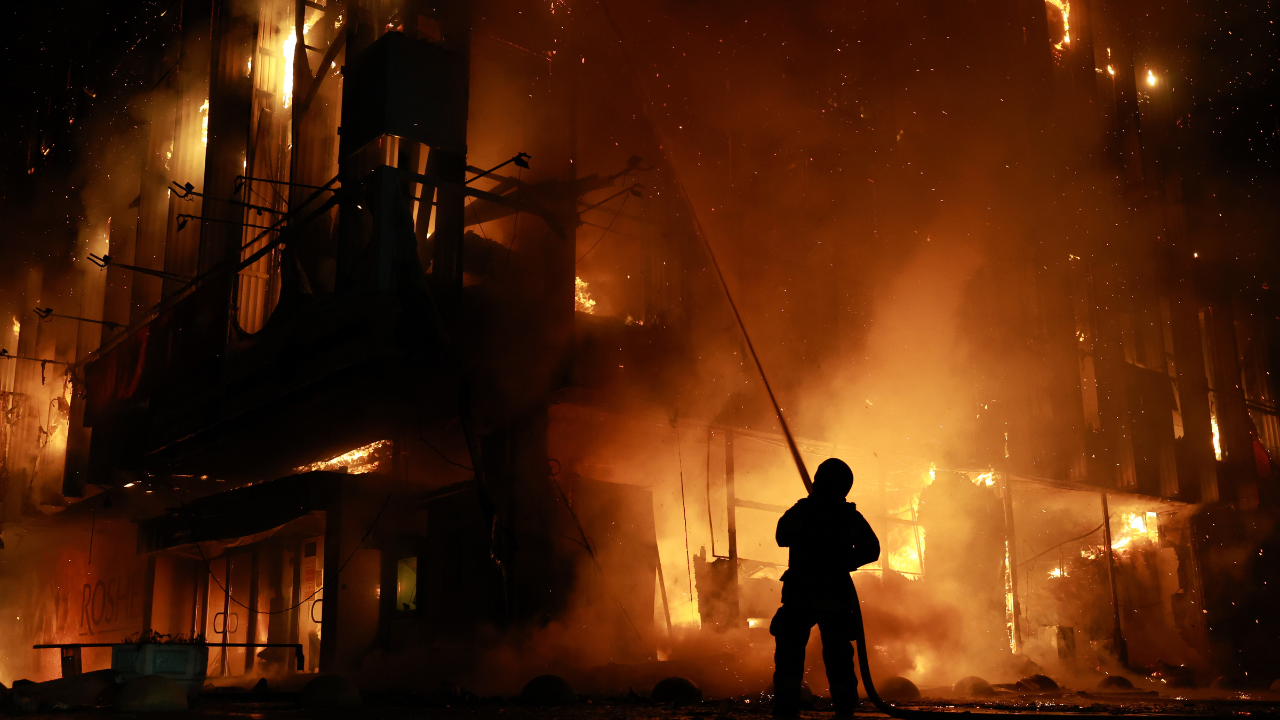
How Russia, Ukraine traded strikes overnight on oil, energy sites - videos
How Moscow's missiles, drones hit Ukraine as Kyiv struck Russian oil sites Russia launched a massive overnight barrage of missiles and drones across Ukraine, striking oil, gas and industrial facilities and killing at least four people, Ukrainian officials told Tuesday.The attack targeted a key oil and gas facility in Ukraine’s Poltava region with ballistic missiles, according to Reuters.Moscow also struck industrial sites in the southeastern cities of Dnipro, Kryvyi Rih and Pavlohrad, while an attack on an energy facility in the northern Chernihiv region cut power supplies to nearly 100,000 consumers. The latest exchange of aerial attacks came as Ukrainian President Volodymyr Zelenskyy was visiting the United States.Days ago, US President Donald Trump raised concerns that both sides should stop targeting each other’s fuel infrastructure.Russia has intensified its air campaign in recent months, hitting economic targets ranging from businesses and ports to logistics hubs, even as fighting along the front line has largely stalled more than four years after Moscow’s full-scale invasion of Ukraine in February 2022. Both sides deny targeting civilians. Strikes hit Ukraine's industrial heartland Russian forces simultaneously targeted industrial enterprises in Dnipro, Kryvyi Rih and Pavlohrad in the Dnipropetrovsk region, Governor Oleksandr Hanzha said on Telegram.The region is a major industrial hub, home to machine-building, steel-making and other manufacturing industries. Russia used missiles, drones and artillery against four districts, killing four people and injuring six in Dnipro, Hanzha said. A business and warehouse premises were also badly damaged.Ukraine's air force said the Russian barrage included an unspecified number of Oniks anti-ship and ballistic missiles, four cruise missiles and 212 drones.Russia's defence ministry said its forces struck industrial and military facilities in Ukraine, including targets in the fuel and energy sector, as well as port infrastructure and sea vessels serving the Ukrainian military.Businesses were also damaged in Pavlohrad and Kryvyi Rih, the hometown of Zelenskyy, Hanzha said.In neighbouring Chernihiv region, a Russian strike on an energy facility disrupted electricity supplies to nearly 100,000 consumers, according to an electricity distributor.Poltava region was also hit in what governor Vitalii Diakivnych described as a "massive" attack. Russian forces struck an industrial enterprise and a critical infrastructure facility, though officials did not immediately provide further details.Russia's defence ministry said its forces had struck an oil refinery in Kremenchuk, in the Poltava region. Ukraine strikes back inside Russia Ukraine has meanwhile stepped up its own drone campaign against targets deep inside Russia, including oil refineries and major online retailers.Ukrainian drones struck civilian targets in Russia's Samara region on the Volga River, killing one person and injuring four, the local governor said. The region is home to strategically important industrial facilities, including oil refineries. Russia's defence ministry said its air defence units destroyed 297 Ukrainian drones over various Russian regions overnight.

Mint Explainer: What the Nayara vs SAP ruling means for Indian contracts caught in foreign sanctions
The Delhi High Court’s interim order directing SAP India to restore services to Nayara Energy reinforces the primacy of local contract law without granting Indian firms blanket immunity from foreign sanctions, experts said.
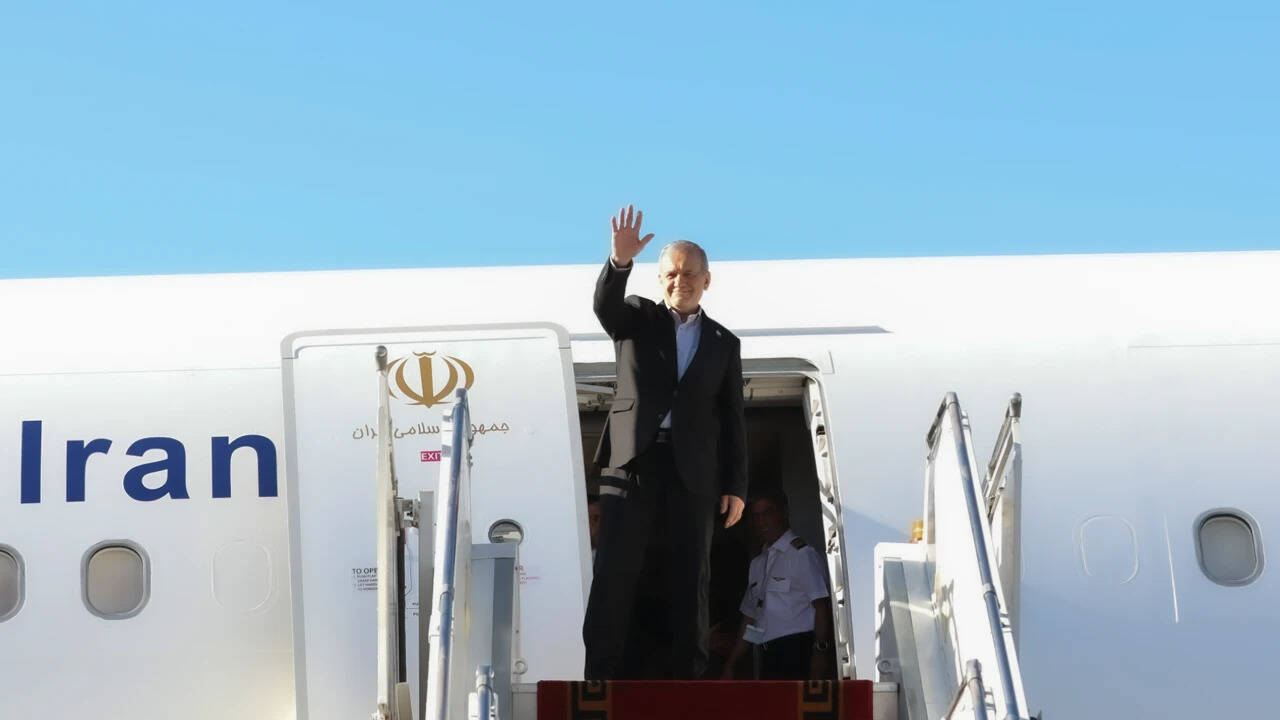
Iran president invited to New York for UN; but restricted to hotel-UN route
File photo: Pezeshkian waves to media and officials as he boards his plane while leaving Mehrabad airport for New York to attend the UN General Assembly, in Tehran, Iran Iranian president Masoud Pezeshkian is set to address the United Nations General Assembly in New York this week, giving Tehran a rare opportunity to make its case before the international community even as Iran and the United States remain locked in a nearly seven-month-old war.But Pezeshkian and his delegation will face strict restrictions during their stay in the US. According to a report by The Wall Street Journal, they will be allowed to travel between their Manhattan hotel and the UN headquarters but cannot freely move around New York without permission.The unusual arrangement reflects the tensions surrounding Pezeshkian’s visit. The US has long imposed restrictions on Iranian diplomats, but there is little precedent for Washington hosting the leader of a country with which it is currently at war during the UN General Assembly, WSJ reported.Pezeshkian is expected to use his UN address on Wednesday to argue that Iran has been the victim of aggression and that its actions have been in self-defence, Richard Gowan, programme director for global issues and institutions at the International Crisis Group, told WSJ.The Iranian president is also seeking meetings with analysts from US and European think tanks while in New York, people familiar with the matter told WSJ. However, some analysts have expressed concerns about engaging with the Iranian delegation because of US sanctions restricting certain interactions with Tehran. US restrictions limit Iranian delegation’s movement Since 2024, the State Department has restricted the Iranian delegation’s movement largely to the route between the airport, the Millennium Hilton hotel and UN headquarters, according to WSJ. The hotel has hosted Iranian officials repeatedly since 2013.The Trump administration also introduced tighter restrictions last year, including requiring State Department permission for Iranian delegates to shop at certain stores or purchase luxury goods.The restrictions exist alongside the US obligation as host country of the UN. Under the 1947 agreement establishing the UN headquarters in New York, Washington agreed not to impose impediments on officials from member states attending UN business.Marko Milanović, a professor of international law at the University of Reading, described the situation as unusual from an optics standpoint but said the US was legally required to allow foreign dignitaries to attend the General Assembly.Iranian leaders have nevertheless used the UN as an important platform to challenge US policy for decades. In 1980, while American hostages were being held in Tehran, an Iranian delegation attended the UN and used its appearance to condemn Iraq's invasion of Iran. During the Cold War, Soviet leaders also regularly used the General Assembly to criticise Washington.Pezeshkian's appearance comes after a year of escalating confrontation. Last year, he addressed the UN months after a 12-day US-Israeli bombing campaign targeting Iran's nuclear facilities. He denied that Tehran sought nuclear weapons and accused its opponents of undermining diplomacy.This year's visit comes amid continued international tensions over Iran's nuclear programme and its disruption of shipping through the Strait of Hormuz. Iran has also faced criticism over attacks by Houthi forces in Yemen on ships in the Red Sea.US President Donald Trump, who is also scheduled to address the UN, has defended military action against Iran by accusing Tehran of being the world's leading state sponsor of terrorism and insisting that it must not develop nuclear weapons. Trump has also said he remains open to meeting Pezeshkian in New York.Despite the diplomatic activity around the General Assembly, a major breakthrough appears unlikely. UN Secretary-General António Guterres has said serious US-Iran dialogue would probably have to take place outside New York, while diplomats have indicated that no formal negotiations are currently planned during the UN week.
DeepSeek to brief UN Security Council on AI soon
BEIJING - Chinese AI startup DeepSeek will be among the companies briefing the United Nations Security Council this week on the risks posed by artificial intelligence, two sources familiar with the matter said, as world leaders gather in New York for the annual UN General Assembly. The 15-member Security Council is set to meet on Wednesday to discuss AI and international security, weeks after several AI industry leaders called for a coordinated slowdown of the development of the increasingly powerful AI systems, warning that they could soon improve on their own and slip beyond human control. OpenAI CEO Sam Altman plans to brief the meeting, where diplomats also expect participation from senior representatives of Anthropic, Reuters reported last week. DeepSeek and other Chinese AI firms including Moonshot have been invited to make statements, one of the sources said. DeepSeek founder Liang Wenfeng does not plan to attend, the source said, cautioning that plans remain fluid and could change at the last minute. Live Events DeepSeek and Moonshot did not immediately respond to requests for comment. The UN Security Council, which is charged with maintaining international peace and security, met for the first time on the risks of artificial intelligence in 2023. At the time, China warned the technology should not become a "runaway horse" and the US warned against its use to censor or repress people. UN Secretary-General Antonio Guterres warned world leaders last week that rapidly advancing AI poses risks that cannot be ignored, putting him at odds with US President Donald Trump, who has argued existing safeguards are sufficient and China would benefit from the doubt being cast on AI development. Chinese state media have dismissed calls for a slowdown in AI development as stemming from a "Cold War playbook," aimed at preserving Washington's dominance in cutting-edge technology and excluding Beijing from the global AI governance system. Unlike leaders of US frontier labs such as OpenAI and Anthropic, the heads of China's leading model developers have rarely publicly articulated the possibility that increasingly capable AI systems themselves could deceive humans, evade control or cause catastrophic harm. They have also remained largely silent on those risks since the debate intensified in the US this month. Senior US and Chinese officials agreed to hold further talks on AI safety, US Treasury Secretary Scott Bessent said on Monday, after meeting ahead of Trump's scheduled talks with Chinese president Xi Jinping later this week in Washington. Add as a Reliable and Trusted News Source Add Now!

Indo-Tibet border force scales 24,100-foot Mt Abi Gamin, unfurls Tricolour at summit
Mt Abi Gamin, also known as Ibi Gamin, is located in the Garhwal Himalayas in Chamoli district of Uttarakhand, close to the India-Tibet border.

Trump vs press: From Nixon and Obama to White House media ban, history of presidential clashes with journalists
Donald Trump's move to bar CNN, MS NOW and Politico from the White House has renewed debate over press access and presidential-media relations. From Richard Nixon to Barack Obama, the tensions between presidents and the press have evolved alongside changing media technology.