News
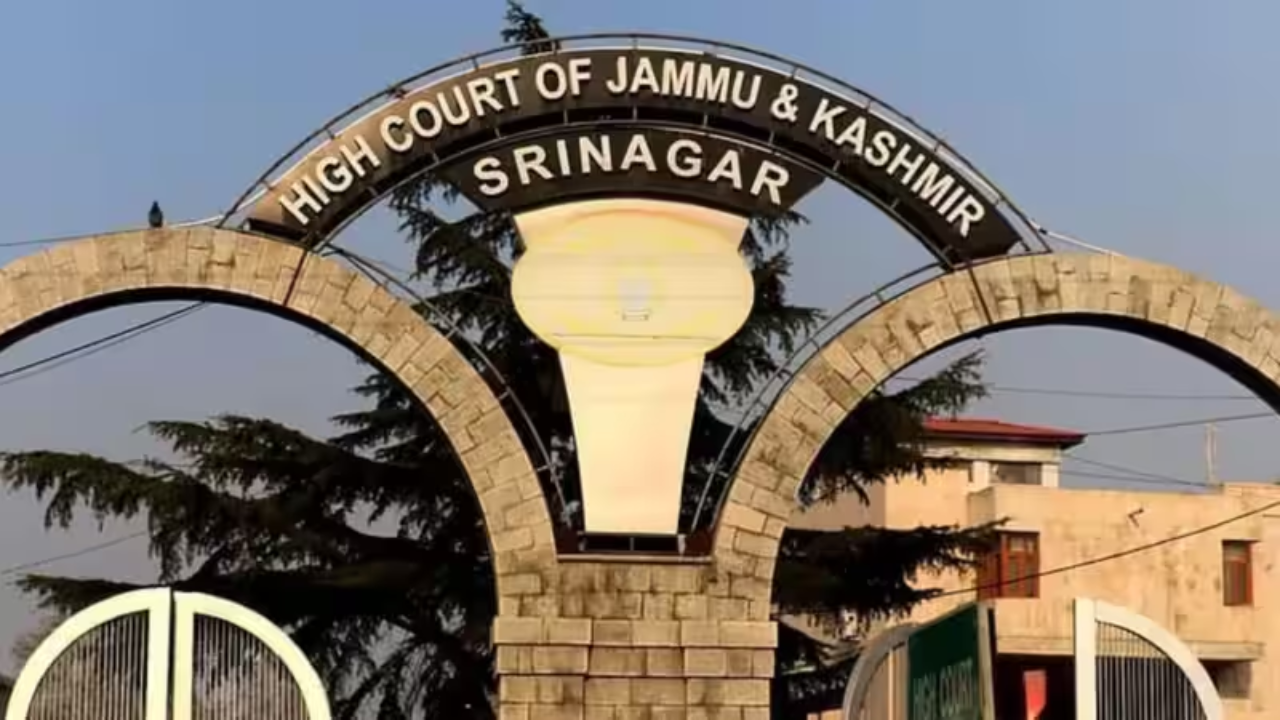
Can’t deny employee security clearance based on kin’s antecedents: J&K high court
The committee said CID’s denial of security clearance was not based on any adverse material concerning his conduct, integrity, character or antecedents but stemmed exclusively from 'the alleged antecedents of his brother and the perceived possibility of a security risk arising therefrom' SRINAGAR: A Jammu and Kashmir high court (HC) panel Tuesday rejected a CID report against an HC staffer, observing that an employee cannot be denied security clearance solely because of his brother’s alleged antecedents.HC engaged Pampore resident Firdous Ahmad Sheikh as a daily-rated worker on April 1, 2010, and posted him at its Srinagar wing. On July 4, 2024, HC regularised his services as an orderly under the Regularization of Services of Daily Wagers in the High Court of Jammu & Kashmir and Ladakh Regulations, 2022.Like other appointments, Firdous’s regularisation was subject to CID verification, as is required for govt employment in J&K. On Jan 1, 2026, CID denied him security clearance, citing the “heightened adversity of his brother, Abdul Qayoom Sheikh”.The matter was placed before the Chief Justice, who referred it to the Committee for Appointment and Promotion of Officials, Officers of the High Court Staff, for consideration. Join conversation View All Comments → Share your thoughts in the comments Insightful Agree Disagree Skeptical Concerning Promising Worth Reading Big Development Post Comment Be respectful · TOI community guidelines The committee verified Firdous’s testimonials and found them genuine. It said CID’s denial of security clearance was not based on any adverse material concerning his conduct, integrity, character or antecedents but stemmed exclusively from “the alleged antecedents of his brother and the perceived possibility of a security risk arising therefrom”. The panel said Firdous had served the HC since 2010, and nothing adverse had been reported about his conduct, integrity or performance. “On the contrary, the record reflects that his work and conduct have remained satisfactory and that no vigilance enquiry or complaint is pending against him,” it said.Quoting J&K HC’s Feb 11, 2025 judgment in the Mohd Amir Malik v. Union of India and others case—which held that a person cannot be deprived of his legal or service rights solely on account of the conduct or antecedents of his relatives—the panel noted that liability cannot be fastened upon an individual merely on account of the alleged acts or antecedents of a close relative in the absence of any cogent material establishing the individual’s own involvement, association, complicity or misconduct.
Times of India·3 hours ago·2 min read
News
4,000-year-old Egyptian tomb of ‘keeper of king’s secrets’ unearthed
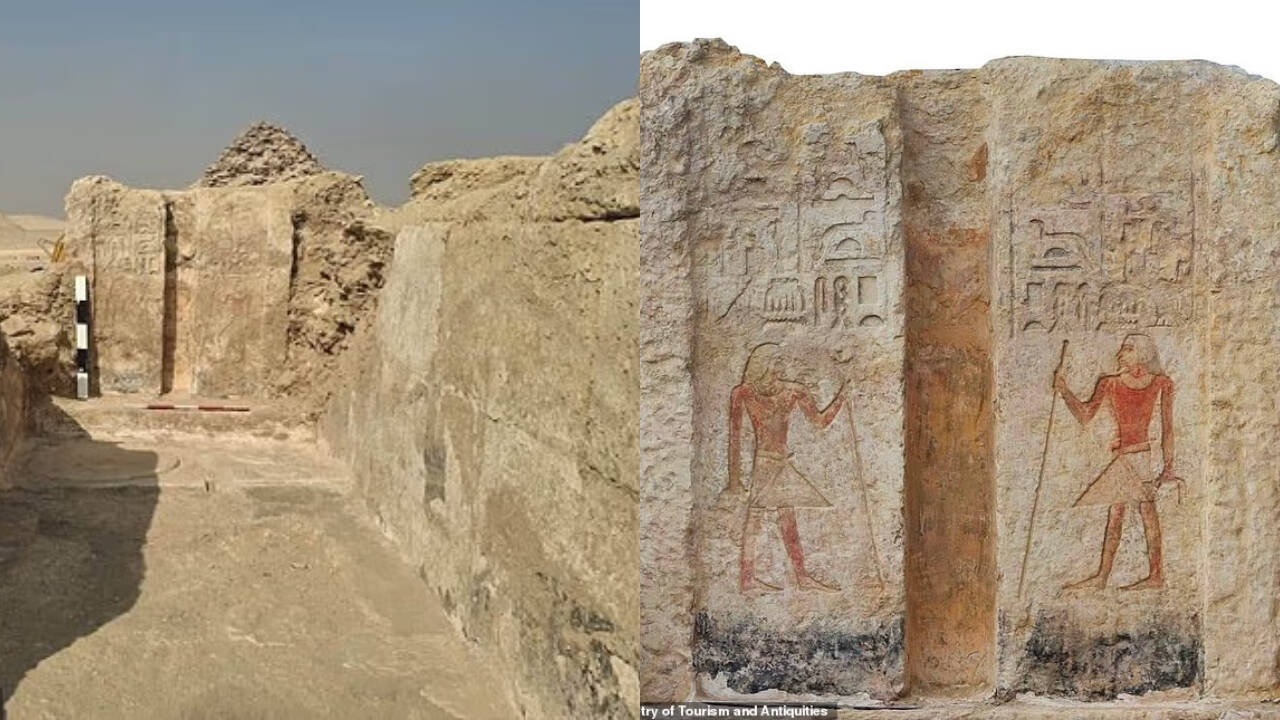
It is reported that the tomb contains the remains of a funerary chapel and a false door, one of the most recognisable features of ancient Egyptian burial architecture. These structures were more than decorative elements. Beneath the ancient landscape of Saqqara, where generations of Egyptians buried their dead, archaeologists have uncovered a tomb that offers a glimpse into the world of royal power more than 4,000 years ago. The burial belonged to Sakhnetio-Btah, a senior official whose titles placed him close to the centre of the Old Kingdom administration. According to a latest report by Daily Mail, the discovery at the Bubasteion Necropolis includes a funerary chapel, ritual objects, burial shafts and several remarkably preserved artefacts, helping researchers piece together how elite Egyptians prepared for death and how the site was used long after Sakhnetio-Btah was buried. A man trusted by the king As per the report, Hieroglyphic inscriptions inside the tomb helped identify its owner and revealed the range of positions he held during his lifetime. Among them was the striking title of “keeper of the king's secrets”. Rather than suggesting that Sakhnetio-Btah guarded mysterious treasures, the title is understood to have referred to his access to confidential royal documents and decrees. His responsibilities extended well beyond that role. He served as a royal chamberlain, a priest associated with the goddess Maat and a supervisor of the royal library, placing him among the senior figures within the administrative structure of the Old Kingdom. The collection of titles provides an unusual window into the hierarchy surrounding the pharaoh and the responsibilities entrusted to officials operating within the royal court. A symbolic doorway to the afterlife Also, the Daily Mail report states that the tomb contains the remains of a funerary chapel and a false door, one of the most recognisable features of ancient Egyptian burial architecture. These structures were more than decorative elements. The false door was understood as a symbolic passage between the world of the living and the realm of the dead, allowing the deceased to receive offerings and maintain a connection with the living world. Archaeologists also found an offering table, an offering slab and a purification basin. Their discovery in their original positions is particularly valuable because it preserves evidence of how funerary rituals were organised and carried out. Burials reveal a changing necropolis Surrounding Sakhnetio-Btah's tomb is a network of interconnected burial shafts containing numerous human remains and painted funerary cartonnage. The colourful coverings, made from layers of material resembling papier-mâché, were placed over mummies and commonly decorated with gods, hieroglyphs and scenes associated with the journey into the afterlife. More than 100 ushabti figurines were also recovered. These small figures were intended to perform tasks for the deceased in the afterlife, reflecting the elaborate preparations made for continued existence beyond death, adds the report. Among the most significant discoveries were three stone sarcophagi that remained sealed and intact in their original locations. A wooden falcon statue, pottery vessels and other artefacts added to the collection. Some sections of the complex appear to have been looted in antiquity, but many surviving objects remain in unusually good condition. Saqqara's archaeological treasure trove The discovery adds another layer to Saqqara, one of Egypt's most important archaeological landscapes. The vast necropolis is home to the Step Pyramid of Djoser, Egypt's oldest pyramid, built roughly 4,700 years ago, as well as thousands of tombs associated with rulers, priests, nobles and officials. Recent excavations at the site have revealed sealed coffins, animal cemeteries, mummification workshops and richly decorated burial shafts. Together, these discoveries have expanded knowledge of not only Egypt's rulers but also the religious customs, occupations and daily lives surrounding death. As excavation continues around the newly uncovered tomb, researchers expect the surrounding burial network to provide further evidence of how Saqqara evolved and was repeatedly reused across different periods of Egyptian history.Images Courtesy: Daily Mail
Times of India·4 hours ago·3 min read