The 100-bed Shahid Shamsuddin Ahmed Hospital in the Sylhet region has been overwhelmed by measles cases. Bangladesh is struggling to contain what has emerged as the worst measles outbreak this year, with more than 1,100 deaths reported amid falling vaccination coverage, gaps in healthcare outreach and weaknesses in official data, according to a Reuters report.The country reported 202,000 suspected measles cases, including 22,000 laboratory-confirmed infections, between the outbreak’s start in mid-March and October 9, the World Health Organization (WHO) said. At least 1,147 people have died, with children under five accounting for 94% of reported deaths.“This is a real warning to every country,” Mark Jit, a WHO vaccine adviser and professor at New York University’s School of Global Public Health, told Reuters, stressing that preventing outbreaks through vaccination is easier, cheaper and safer than responding to a crisis. Vaccination coverage falls below critical threshold Bangladesh’s response was hampered by incomplete data on children, inadequate preparation for emergency vaccination and difficulties reaching parents in remote communities.WHO and UNICEF estimated that in 2024, the country achieved 96% coverage for the first measles vaccine dose and 93% for the second.However, vaccination coverage declined amid political turmoil following the protests that ended former prime minister Sheikh Hasina’s 15-year rule in 2024. Health workers went on strike, vaccine orders were delayed and follow-up vaccinations were disrupted, Reuters reported.A WHO-UNICEF report published in July estimated that first-dose coverage fell to 90% in 2025, while second-dose coverage dropped to 86%. Both figures were below the 95% coverage the WHO says is necessary to prevent outbreaks. Emergency vaccination drive missed millions of children Bangladesh launched an emergency vaccination campaign in April and May, with nearly 20 million children receiving a dose. The government initially said the campaign had covered all children aged six months to five years.However, a subsequent routine health intervention in June had a target list containing four million more children in the same age group, exposing a significant gap in the emergency campaign’s reach, according to Reuters.By August, the proportion of children with confirmed measles who had not been vaccinated remained virtually unchanged, rising from 82% before the campaign to 85% afterwards, meeting documents reviewed by Reuters showed.“When preparedness checks are not done properly, it is often the poorest and hardest-to-reach children who miss out on vaccination and pay the price,” Mahmudur Rahman, an epidemiologist and chair of Bangladesh’s National Verification Committee for Measles and Rubella Elimination, told Reuters.
202,000 cases, 1,147 deaths: Bangladesh faces world’s worst measles outbreak
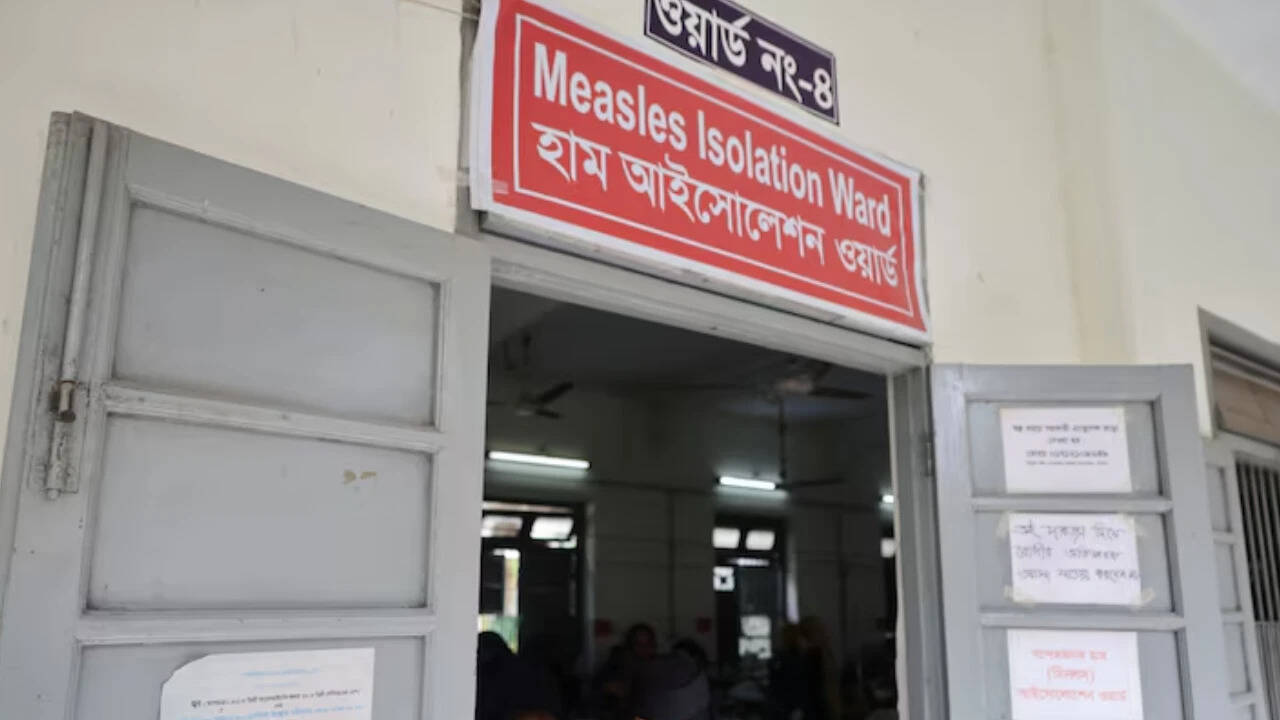
The 100-bed Shahid Shamsuddin Ahmed Hospital in the Sylhet region has been overwhelmed by measles cases. Bangladesh is struggling to contain what has emerged as the worst measles outbreak this year, with more than 1,100 deaths reported amid falling vaccination coverage, gaps in healthcare outreach and weaknesses in official data, according to a Reuters report.The country reported 202,000 suspected measles cases, including 22,000 laboratory-confirmed infections, between the outbreak’s start in mid-March and October 9, the World Health Organization (WHO) said. At least 1,147 people have died, with children under five accounting for 94% of reported deaths.“This is a real warning to every country,” Mark Jit, a WHO vaccine adviser and professor at New York University’s School of Global Public Health, told Reuters, stressing that preventing outbreaks through vaccination is easier, cheaper and safer than responding to a crisis. Vaccination coverage falls below critical threshold Bangladesh’s response was hampered by incomplete data on children, inadequate preparation for emergency vaccination and difficulties reaching parents in remote communities.WHO and UNICEF estimated that in 2024, the country achieved 96% coverage for the first measles vaccine dose and 93% for the second.However, vaccination coverage declined amid political turmoil following the protests that ended former prime minister Sheikh Hasina’s 15-year rule in 2024. Health workers went on strike, vaccine orders were delayed and follow-up vaccinations were disrupted, Reuters reported.A WHO-UNICEF report published in July estimated that first-dose coverage fell to 90% in 2025, while second-dose coverage dropped to 86%. Both figures were below the 95% coverage the WHO says is necessary to prevent outbreaks. Emergency vaccination drive missed millions of children Bangladesh launched an emergency vaccination campaign in April and May, with nearly 20 million children receiving a dose. The government initially said the campaign had covered all children aged six months to five years.However, a subsequent routine health intervention in June had a target list containing four million more children in the same age group, exposing a significant gap in the emergency campaign’s reach, according to Reuters.By August, the proportion of children with confirmed measles who had not been vaccinated remained virtually unchanged, rising from 82% before the campaign to 85% afterwards, meeting documents reviewed by Reuters showed.“When preparedness checks are not done properly, it is often the poorest and hardest-to-reach children who miss out on vaccination and pay the price,” Mahmudur Rahman, an epidemiologist and chair of Bangladesh’s National Verification Committee for Measles and Rubella Elimination, told Reuters.
Read the full story at Times of India.

