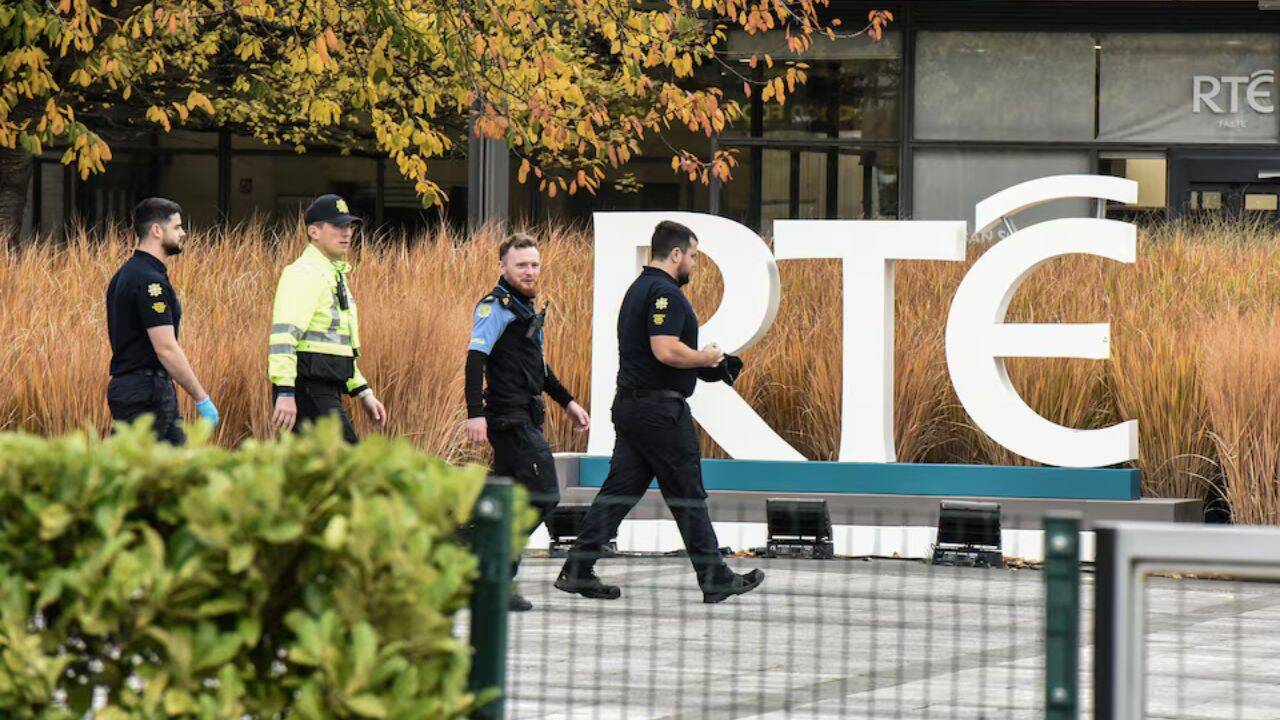
Europe is facing an unusual security crisis, with a wave of bomb threats targeting passenger aircraft now spreading to major media organisations across the continent.Dozens of flights have faced bomb threats since the beginning of the week, triggering diversions, emergency security checks and fighter-jet escorts in several European countries.The crisis took a new turn on Friday, November 6, when Reuters reported that Irish broadcaster RTÉ, Britain's Sky and Bulgaria's Nova TV were among the media organisations that received security threats, prompting evacuations and disruption to broadcasting.The Associated Press reported that fighter jets were scrambled in Hungary to escort three threatened passenger aircraft, while French authorities confirmed four fresh threats against planes flying over French territory.Despite the extensive security response, searches have found no explosives aboard the affected aircraft or inside the evacuated RTÉ premises, according to AP and RTÉ.Adding a geopolitical dimension to the crisis, Reuters reported that one threatening email was signed by an individual identifying himself as Mikhail Andropov and claiming responsibility for the aviation threats.However, the sender's identity, the origin of the emails and any possible connection between the incidents remain unverified. European authorities are now investigating whether the threats are part of a coordinated campaign designed to disrupt essential services and create fear across the continent.As the bomb threats spread from passenger aircraft to media organisations, European leaders and security officials have expressed concern over the growing disruption, with some warning that the incidents could be part of a wider campaign of intimidation.While governments have stopped short of identifying those responsible, Spain has raised the possibility of hybrid aggression and psychological warfare, while Ireland has urged the public to remain calm.Speaking to RTÉ Radio after the broadcaster resumed normal programming, Martin said European security agencies had yet to establish whether the threats against aircraft and media organisations were the work of individuals or part of a coordinated campaign."It just illustrates how relatively simple it can be to cause disruption and to undermine the normal operation of society through unconventional activities of this kind, which are designed to cause disruption, designed to cause fear and anxiety," he said.Who is behind the threats? The Russian connection, extremist groups and possible mastermindsThe identity of those behind the wave of bomb threats remains unknown, but several clues have drawn attention towards Russia, far-right extremist networks and the possibility of a wider hybrid operation.The investigation has taken on a geopolitical dimension after threatening emails invoked the name of a banned Russian movement, while another message sent to broadcasters in Ireland and Bulgaria was signed by an individual calling himself Mikhail Andropov.However, European authorities have not officially attributed the campaign to any country or organisation. The possibility of copycat threats and independent actors also remains under investigation.One of the most significant leads emerged on November 5, when threatening emails sent to airports in Rome and Sofia claimed to represent the "fighters of the Male State", an anti-feminist movement that originated in Russia.According to AFP, the emails contained misogynistic language and warned that explosive devices had been placed aboard passenger aircraft. One message sent to Sofia airport claimed that three Ryanair flights heading to Bulgaria had been targeted and warned that an explosion would occur within 60 minutes.The message declared: "Your feminist regime will remember it forever. The explosion will occur in 60 minutes. Today your skies will turn red."The Male State, known in Russian as Muzhskoye Gosudarstvo, was founded in 2016 by Russian blogger Vladislav Pozdnyakov. The movement became known for its far-right nationalist and anti-feminist ideology, online harassment and campaigns against women and minorities. A Russian court designated it an extremist organisation and banned it in 2021.Pozdnyakov denied involvement, saying the organisation no longer existed and that anyone using its name to carry out provocations was acting independently.Lou Osborn, founder of Inpact, a non-governmental organisation that monitors clandestine Russian activities, told AFP that the movement had thousands of members and used Nazi symbolism. She also cautioned that the extent of its connections with people in power remained unclear.The Male State reference therefore provides investigators with a possible lead into the identity and ideology of the sender, but there is no verified evidence connecting the banned organisation or its founder to the aviation threats.Is this a Russian-backed hybrid operation or a campaign by extremist groups?European governments have repeatedly accused Moscow of using sabotage, cyberattacks and disinformation to destabilise countries supporting Ukraine. According to Reuters, the latest threats have emerged amid suspected sabotage incidents involving German electricity infrastructure, defence-related facilities in the Baltic region and Leipzig airport.Spanish Foreign Minister José Manuel Albares described the incidents as a possible form of "hybrid aggression" and "psychological warfare", arguing that their similarities could not be dismissed as coincidence. However, neither he nor other European officials have established Russian responsibility for the bomb threats.Reuters has also been unable to establish whether the emails targeting broadcasters originated from the same source as those sent to airports and airlines.Aviation security expert Eric Schouten, head of security group Dyami, told Reuters that the incidents appeared consistent with methods used in hybrid operations, but proving the involvement of a state actor would require further evidence.Jacob Funk Kirkegaard, a senior fellow at the Bruegel think tank in Brussels, told the Associated Press that the threats appeared intended to create uncertainty about the reliability of European air travel. The expansion to broadcasters could further disrupt public communication and generate anxiety.For now, investigators are examining possibilities ranging from independent hoaxers and extremist sympathisers to a wider hybrid operation, but there is no publicly verified evidence establishing that Moscow or any state-backed organisation directed the campaign.
After dozens of flights, broadcasters across Europe get bomb threats - what's going on
Recent bomb threats targeting passenger aircraft have sparked panic across Europe, causing significant disruptions in air travel and affecting media outlets. Several flights have been escorted by military jets as precautionary measures in response to looming security risks. Authorities are investigating connections to extremist groups while assessing whether geopolitical motives play a role in these operations, which appear to aim at fostering widespread anxiety.
Read the full story at Times of India.