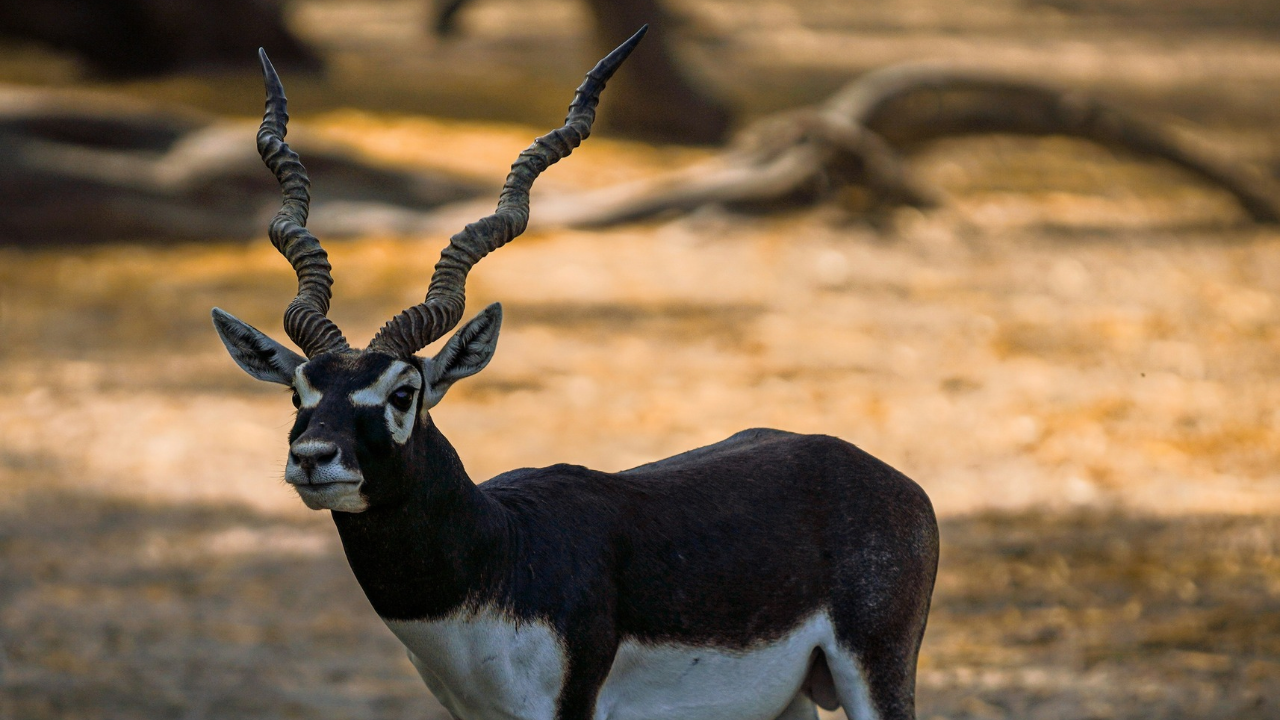
Image credits: Harshit Mishra/ Unsplash The Bishnoi are a religious community concentrated in the Thar Desert of western India, with a centuries-old tradition of protecting trees and wildlife as a matter of faith. The beliefs go back to a fifteenth-century guru and still shape how villagers treat trees, animals and water. One of the trees they protect is the Khejeri (Prosopis cineraria), a keystone species of the region. A comparative research paper,"Religious tradition of conservation associated with greater abundance of a keystone tree species in rural Western Rajasthan, India", published in the Journal of Arid Environments in 2014, tested whether the community's reputation holds up. The researchers worked on two things: whether Bishnoi presence and Khejeri abundance were positively associated across village areas, and which village characteristics, such as land type, human and livestock population and income, were linked to that abundance. Their wider goal was to test the claim of a positive Bishnoi effect on a keystone species within the region’s changing ecology. Before asking whether the Bishnoi make a difference, the researchers had to describe the landscape they work in, and that landscape has been under growing pressure. What happens when a desert gets watered? The Thar Desert lies in Rajasthan, India's largest state, and human activity has put it under considerable environmental pressure. Changes in land use and land cover have altered local ecology and livelihoods. Over the last fifty years, large irrigation projects meant to raise farm output have begun to change how the desert's ecosystem works. People stand to gain economically, while the other species sharing the landscape are pushed to adapt. Researchers add that more irrigation has helped an invasive plant spread, and that plant threatens the agricultural goals the irrigation was meant to serve. Why does one desert tree matter so much? Rural life in Rajasthan rests heavily on the Khejeri tree. It holds soil in place and cycles nutrients, which supports farming. Households use it for firewood, and livestock eat the leaves and fruit of branches that people lop off. Many birds nest in it, including critically endangered vultures. The tree is under threat, though. As human and livestock populations grow, more Khejeri branches are harvested, and the invasive Prosopis juliflora could push the native tree out of its own landscape, according to researchers. Why did the Bishnoi choose this tree to protect? Image credits: Story of Rajasthan/Instagram The Bishnoi have practiced their religion since the late 1400s, and it requires them to protect Khejeri trees even at the cost of their lives. Researchers say the founder saw the tree as essential to people living in "a region plagued by frequent drought and famine." Its ability to thrive in arid land while supporting human livelihoods is probably why it was singled out. Other castes, local managers and scientists have long regarded the Bishnoi as effective conservationists. The most dramatic example came in 1730, when 363 Bishnoi died refusing to let go of trees that Maharaja Abhay Singh's men were cutting down. Still, nobody had systematically tested whether the Bishnoi are actually associated with more Khejri trees, and the research above set out to fill that gap. What does protection look like today? Day to day, it comes down to taking only what is needed. Villagers gather Khejri leaves and pods for food and traditional medicine and use the leaves as fodder. They run community animal care centers, watch for deforestation, plant Khejri trees against desertification and keep sacred groves that safeguard trees, animals and water. Researcher Neekee Chaturvedi recorded a village reservoir kept up by Bishnoi labor every new-moon night, with every man, woman and most children taking part. Blackbucks, chinkaras, peacocks and great Indian bustards move freely through Bishnoi villages. A 2022–2023 field survey found more natural vegetation and wildlife there than in parts of the Thar, particularly Khejri trees and blackbucks. Pressures remain: deforestation, falling groundwater, mining, poaching and land-grabbing. What can the rest of us take from it? Image credits: Research gate None of the sources claim the Bishnoi approach can be moved unchanged to other places. They do suggest that conservation can be sustained by shared belief and everyday community habits. Chaturvedi notes that the desert's biodiversity is managed through active human participation, with people part of the system and not kept out of it, and she proposes community-based cultural tourism as one way to share these ideas with visitors. For a general reader, the practical point is modest. Take only what you need, look after what sustains you and pass the habit on.In a desert reshaped by irrigation and an invasive plant, field evidence reports more vegetation and wildlife in Bishnoi villages than in parts of the surrounding Thar. The community is still under pressure, and nobody should call its record a finished success. Amir Sohel and Farhat Naz conclude in "The Bishnoi: Revisiting Religious Environmentalism and Traditional Forest and Wildlife Management in the Thar Desert," published in Arcadia by the Environment & Society Portal of the Rachel Carson Center in Summer 2024, that the community's value-based approach contributes significantly to managing natural resources sustainably in its region. He also talked about their effort to prevent their own trees from being cut down, the nearby Bishnoi villagers followed Amrita Devi’s example and embraced the Khejri trees in the area. The soldiers ignored the residents’ pleas, and 363 Bishnoi were killed, including Amrita Devi and her daughters. Anyone can borrow the principle at a smaller scale, starting with the trees, animals and water they depend on. You use AI every day. Now get your AI Quotient. Take the AIQ test Get the latest Lifestyle News and more. Download the TOI app.
Bishnoi's centuries-old beliefs fuel extraordinary conservation ethic
The Bishnoi community's conservation initiatives in the Thar Desert have significantly boosted the population of Khejeri trees and local wildlife. Their commitment to nature arises from deep-rooted religious beliefs, showcasing an admirable balance between tradition and modern ecology. Latest research underscores the challenges posed by invasive species and irrigation practices on biodiversity.
Read the full story at Times of India.