Technology
Authoritarianism sets in when society fears questions: Justice Bhuyan
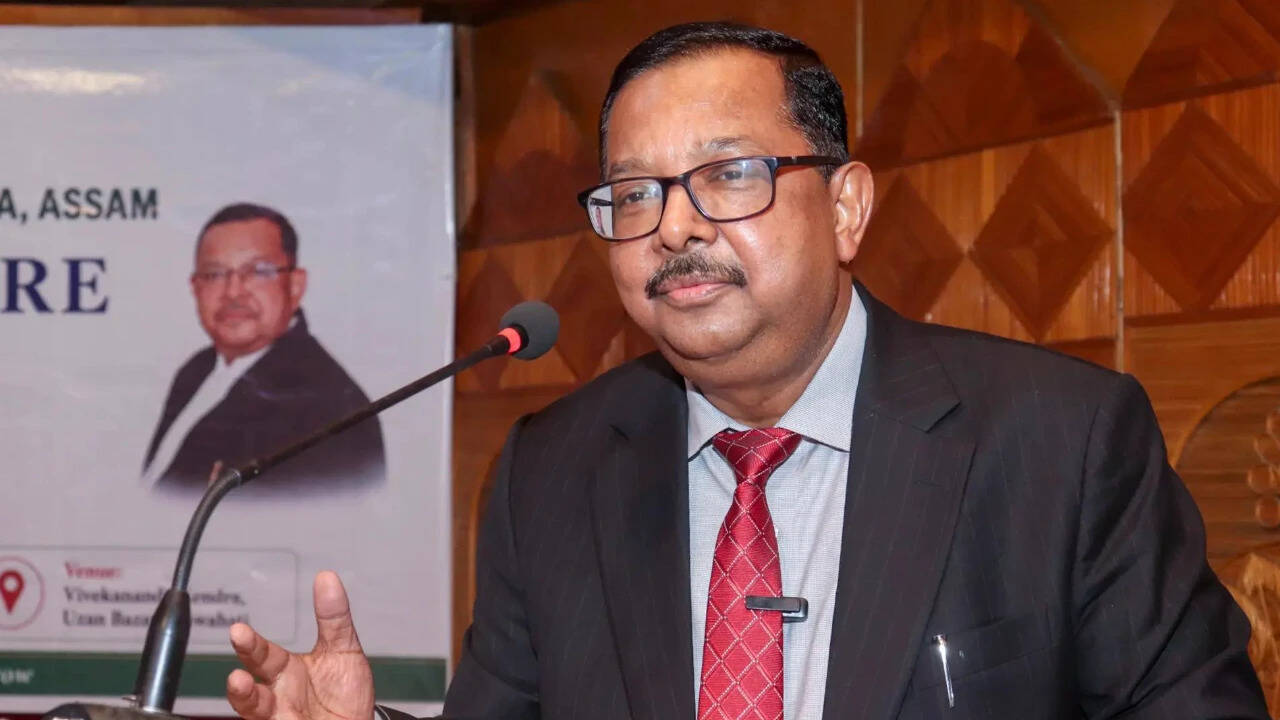
‘Shun the binary of ‘us’ & ‘they’; adopt ‘we’ for unity in diversity,’ said Justice Bhuyan NEW DELHI: At a time when the opposition has branded the NDA govt authoritarian, Justice Ujjal Bhuyan Saturday said authoritarianism sets in when society fears questions, and stressed people must shed the binary of 'us' and 'they' and adopt the core constitutional philosophy of 'we' to preserve the country's unity in diversity.Speaking at the convocation ceremony of University of Science and Technology Meghalaya, the SC judge said, "A society that fears questions becomes vulnerable to authoritarianism. A society that treats tradition as beyond scrutiny may fail to reform unjust practices."Highlighting Article 51A of the Constitution that casts a duty on every citizen to develop a scientific temperament, Justice Bhuyan said, "It does not merely ask us to acquire scientific knowledge. It asks us to cultivate a temperament which is based on reason. It tells us to inquire, to question, to examine and, where necessary, to reform."He said, "I believe, scientific temperament lays the foundation for the rule of law. This is because arbitrary power thrives on ignorance, fear and unexamined belief. A society that accepts claims without evidence is susceptible to superstitious beliefs and becomes vulnerable to misinformation." Attaching great importance to debate, he said those who ask questions must also be willing to listen to a different point of view. "Willingness to reason together through a meaningful debate alone can make a society stronger," he said, adding that questions followed by meaningful and healthy debates can happen only when people have access to information.Inspired by Nobel laureate Amartya Sen's 'The Idea of Justice', which he quoted extensively during the speech, Justice Bhuyan elaborated on the difference between 'institutional democracy' and 'functional democracy' and said that a functional democracy requires public questioning and scrutiny. "Circulation of information and scrutiny by public reasoning thus becomes part of the due process by which a democratic society resonates with justice."He said preservation of diversity demands shunning false narratives and the binary of 'us' and 'they'. Join conversation View All Comments → Share your thoughts in the comments Insightful Agree Disagree Skeptical Concerning Promising Worth Reading Big Development Post Comment Be respectful · TOI community guidelines "For a more just and humane society, it is important that we move away from the destructive binary of 'us' and 'they' and embrace the idea of oneness," he said."Not for nothing, the Preamble to the Constitution starts with the expression - 'We, the People of India'. The Constitution... speaks to all citizens of India as equal members of the constitutional order. Therefore, 'we' represents a larger idea of belonging in which our individual identities or group identities do not diminish our shared constitutional unity," he said.In what could be construed as indirect opposition to Uniform Civil Code, he said, "It does not require that our individual identities should get subsumed in the larger whole. Diversity, therefore, is not an impediment to the constitutional project; rather, it infuses substance and meaning to it."
Times of India·4 hours ago·3 min read
Technology
Shetty Institute of Technology hosts TechNova and NextGen Hackathon in Kalaburagi
You don’t have any Active Subscription.
Subscribed with another email? Logout and Login with that one.
Your active subscription(s)
Account subscription benefits alongside Premium Stories, Editorials, Opinions and more. Unlock these with Subscription
Products you've access to
Additional Subscription Benefits
Need help with your subscription?
Published - October 31, 2026 10:40 pm IST - KALABURAGI
Dignitaries inaugurating SIT TechNova 2026 and the AIC T-Hub NextGen Hackathon 2026 by lighting the ceremonial lamp at Shetty Institute of Technology in Kalaburagi. | Photo Credit: ARUN KULKARNI
Shetty Institute of Technology (SIT), Kalaburagi, hosted TechNova 2026 and the AIC T-Hub NextGen Hackathon 2026 from October 27 to 30, bringing together 89 teams from educational institutions across the country.
TechNova, held on October 27 and 28, featured 26 teams from South India, with Robotics 2.0 among the major attractions. Winners in various categories received cash prizes ranging from ₹5,000 to ₹50,000.
The 36-hour NextGen Hackathon, organised in collaboration with AIC T-Hub on October 29 and 30, saw 63 teams comprising 220 students develop innovative solutions to real-world problems.
Pardha Saradhi of CMR College of Engineering and Technology, Hyderabad, won first place, followed by Smartronics of Symbiosis Skills and Professional University, Pune, and Latents of SIT, Kalaburagi.
Three teams – Technora Crews from SIT, Caffeine and Catastrophe from the Central University of Karnataka, Kalaburagi, and Core4 from NK Orchid College of Engineering, Solapur – were selected for further support from T-Hub.
SIT Director Anirudh Shetty said the events aimed to bring industry exposure, innovation opportunities and the start-up ecosystem closer to students in Kalaburagi. Director Shweta Shetty said such initiatives encouraged students to explore their potential, collaborate and develop practical skills beyond academics.
The four-day programme concluded with cultural performances, music, dance and other entertainment activities on October 30.
Published - October 31, 2026 10:40 pm IST
Comments have to be in English, and in full sentences. They cannot be abusive or personal. Please abide by our community guidelines for posting your comments.
We have migrated to a new commenting platform. If you are already a registered user of The Hindu and logged in, you may continue to engage with our articles. If you do not have an account please register and login to post comments. Users can access their older comments by logging into their accounts on Vuukle.
The Hindu·5 hours ago·2 min read
Technology
Philly professor arrested for blocking delivery robots says she'd do it again
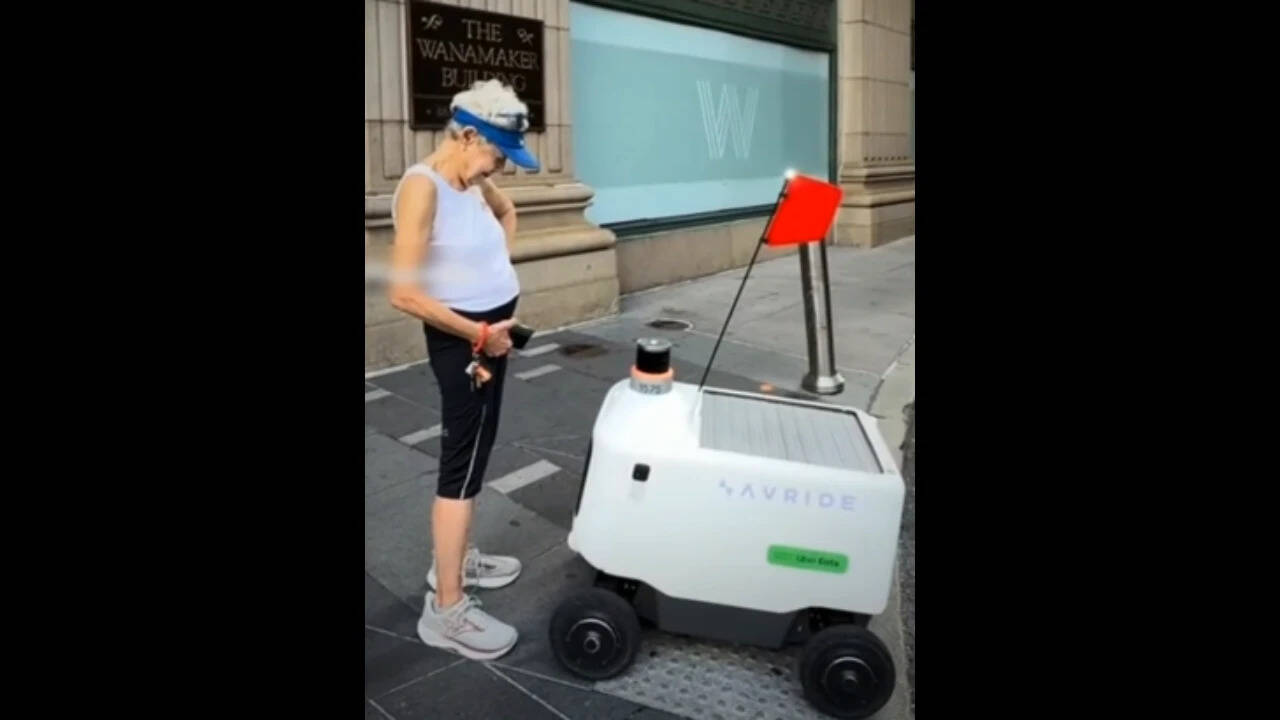
Retired professor has been arrested for blocking a delivery robot in Philadelphia. A 78-year-old retired professor in Philadelphia has vowed to continue protesting delivery robots after she was arrested for repeatedly standing in their way, arguing that her actions were an exercise of free speech and a protest against technology taking over public spaces.Carolyn Marvin, a retired communications professor at the University of Pennsylvania, said blocking autonomous delivery robots had become a habit since the small, wheeled machines began operating on Philadelphia’s streets and sidewalks.October 14 was not the first time Marvin had placed herself in front of one of the robots. She would stop them for a few minutes as they travelled along the sidewalk carrying food orders.“I was under the impression that I had more rights than the robot did,” Marvin said to CNN in an inerview.The October 14 incident ended with her arrest. Marvin said she had been returning home after getting a flu shot when she encountered a delivery robot. She had a jar of enchilada sauce in one hand and chicken biryani takeout in the other when she stood in front of the machine, as she had done on previous occasions.The incident took place in a busy part of the city, and a larger-than-usual crowd gathered. Some people supported her, while others criticized her. Marvin suspects someone in the crowd eventually called the police.Officers handcuffed her, put her in a police vehicle and issued her a citation for disorderly conduct. Philadelphia police said they had responded to a report of “criminal mischief involving a delivery robot”. When officers arrived, they found a woman “who was refusing to allow a delivery robot to pass”, according to an email from the police department. Officers issued multiple commands asking her to move, but she refused to comply.Marvin said she never expected to be arrested because she believed she was not obstructing another person.“I wasn’t impeding any persons. I was impeding a machine,” she said.She described her actions as a symbolic protest against the problems associated with delivery robots, including the displacement of low-income delivery workers, the physical risks the machines could pose to people using sidewalks and privacy concerns arising from their built-in cameras.“I also think that I have a First Amendment right to protest the abuses of corporations in public space, in the same public space that the robots are occupying,” she said.Marvin said she had previously taken part in protests supporting civil rights and abortion rights, supporting Black Lives Matter and opposing the Gulf and Vietnam wars. She sees her campaign against delivery robots as an extension of the same impulse to make the government hear public concerns.She said blocking the machines had also led to conversations with passersby who wanted to know what she was doing. Most were supportive or curious.Marvin said her protest had a limited impact on customers, with an office worker’s lunch potentially delayed by around 15 minutes at most. She added that she did not have unlimited time to spend blocking robots and would do so for 10 or 15 minutes when it was “convenient and possible”.A friend summed up her arrest by telling her: “Well, you got a disorderly conduct charge for impeding capitalism.” Why delivery robots have legal protection Following her arrest, Marvin learnt more about the legal framework governing autonomous delivery devices in Pennsylvania.In 2020, the state legislature passed a law classifying autonomous delivery robots, described in the legislation as “personal delivery devices”, as pedestrians rather than vehicles.The legislation was largely opposed by Democrats, labour unions and accessibility advocates, who argued that allowing delivery robots could threaten jobs and put children and pedestrians at risk. Republicans supported the measure, describing it as an exciting technological development.The law requires vehicles to yield to delivery robots at crosswalks, just as they would to pedestrians, John Mattiacci, a Philadelphia personal injury attorney told CNN.However, the machines are also required to give way to people and cyclists in pedestrian areas.“Personal delivery devices must yield to other pedestrians and pedalcyclists in a pedestrian area,” Mattiacci said.Uber Eats launched its autonomous delivery robot fleet in Philadelphia in March, making the city the fourth in which the company offered robot deliveries. The machines have not been welcomed by everyone. Videos from Philadelphia and other places have shown people sitting on, kicking and vandalising delivery robots.Marvin sees the growing presence of delivery robots as part of a wider trend in which technology and machines are increasingly occupying everyday spaces.“There’s a way in which we’ve surrendered the streets to cars long ago, and I don’t think we should surrender the sidewalks to machines,” she said.“Machines in general encroach on our lives,” she added. “Public space is the most visible place where they’re encroaching on our lives, but they’re going right up the ladder, and lots of people are interested in making that happen.”She said robots were a visible symbol of the wider spread of technology, including artificial intelligence and social media algorithms that influence the images and narratives people consume.Her protest, she said, helps make the issue visible and presents it in a way that might otherwise go unnoticed.Asked whether she planned to resume blocking delivery robots after her arrest, Marvin had a brief answer: “Oh yeah.”This time, however, she said she would keep an eye out for the police.
Times of India·5 hours ago·4 min read