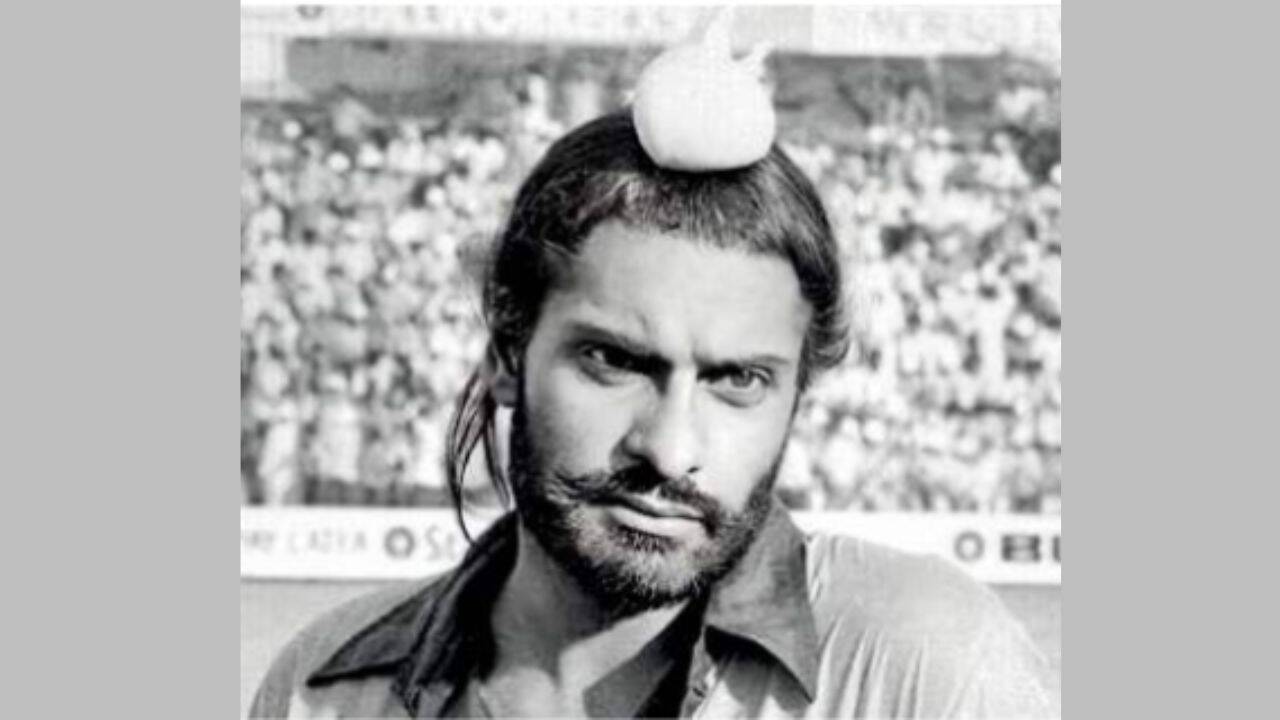
Surjit Singh Randhawa Jalandhar: Every city has its legends. In hockey-loving Jalandhar, Surjit Singh Randhawa is more than a legend. He remains a presence.His name greets visitors at the stadium named after him, echoes through the roads leading to the venue and lives on in an academy that continues to produce international players, six of whom are currently part of the Indian team, including captain Harmanpreet Singh.More than four decades after his death in a road accident in 1984, Surjit — a World Cup winner, an Olympian and an Arjuna Award recipient — remains woven into the sporting fabric of the region.The ongoing Asian Champions Trophy here has brought the spotlight back on the man widely regarded as one of India’s greatest full-backs and penalty-corner specialist. It was Surjit’s equaliser against Pakistan in the 1975 World Cup final paved the way for Ashok Kumar’s title-winning goal. US Midterm Election Results 2026 But for those who knew him, Surjit was not merely a hockey star. He was a teammate, a mentor, a friend and, perhaps most importantly, a symbol of what Punjab hockey once was and still aspires to be.Former India captain Ajit Pal Singh, who was India’s captain in 1975, remembers Surjit as one of the pillars of that golden generation. “He was a dependable defender, a penalty-corner specialist and a fighter to the core. As captain, I always had complete faith in him as a teammate,” said Ajit Pal. Surjit Singh (standing fourth from left) with the Indian team after winning the World Cup (File pic) Yet his journey began in far more humble surroundings.Brigadier Harcharan Singh, another Olympian and three-time World Cup medallist, first saw Surjit as a teenager at a village tournament in 1969. Recognising his talent, he helped the youngster gain admission to Sports College, Jalandhar.Within a few years, the boy who almost missed out on a place at the college established himself as one of the world’s finest defenders. What separated Surjit from others, according to those who played with him, was his relentless work ethic.“Surjit imposed a very disciplined routine on himself. After finishing regular training with the team, he would put in another four or five hours of individual practice,” Harcharan recalled.That dedication transformed him into a player opponents feared and goalkeepers dreaded.Former India goalkeeper Alloysius Edwards never had the chance to play against Surjit but grew up hearing stories about the Punjab legend’s ferocious hitting power.“I once heard from a goalkeeper playing for JCT that he fractured a finger while attempting to stop one of Surjit’s penalty-corner strikes in an era before modern protective equipment became standard,” said Edwards, who represented India at the 1996 Atlanta Olympics and currently coaches Punjab & Sind Bank’s hockey team in Jalandhar.His reputation as a penalty-corner expert became so great that many in Punjab draw a direct line from Prithipal Singh to Surjit Singh and then to present-day India captain Harmanpreet, another defender who is equally lethal from penalty corners. Action underway during the Asian Champions Trophy at Olympian Surjit Singh Hockey Stadium Yet, those who knew him insist his greatness extended beyond hockey.Perhaps Surjit’s greatest contribution came after his playing days ended. What could have faded into history has instead evolved into an institution. For former India captain and Punjab sports administrator Pargat Singh, preserving those memories is precisely why the institutions carrying Surjit’s name remain relevant today.“The younger generation may not know much about him, so we are trying to keep his memories alive. Ultimately, he is part of our history. If we can pass that history on to the next generation, it can inspire and motivate young players,” said Pargat, who served as Director of Sports for Punjab for approximately seven years.That effort is evident across Jalandhar.While the stadium that bears Surjit’s name is hosting an international tournament, Surjit Memorial Hockey Tournament remains one of India’s most respected domestic competitions and Surjit Hockey Academy continues to shape future internationals.The academy, which houses around 100 trainees, has become one of Punjab’s premier hockey nurseries.Players still recount tales of his World Cup heroics, ferocious penalty corners and remarkable understanding of the game. One trainee, Gursimranpreet Singh, recalled an incident in which Surjit challenged officials over the positioning of the goalposts during an international match and was ultimately proven right.Along with the Surjit Hockey Society, which continues to organise the annual memorial tournament, the academy has ensured that Surjit’s influence extends far beyond his playing days. Statue of Surjit Singh outside the stadium in Jalandhar The results are visible in Punjab’s continued production line of talent. Players such as Harmanpreet Singh, Manpreet Singh, Hardik Singh, Mandeep Singh and Jarmanpreet Singh are the latest products of a hockey belt stretching across Jalandhar, Batala and Amritsar.To many former internationals, that pipeline is Surjit’s greatest legacy.His wife, Chanchal Surjit Singh, a former captain of the Indian women’s hockey team, sums it up best.“There is nothing more I can add after seeing all the love people still have for him. He was a legend and one of the kindest souls. To see an international tournament taking place in a stadium named after him is very special,” said Chanchal, 74.Ram Pratap, one of Surjit’s closest friends who was travelling with him when the fatal car crash occurred near Kartarpur, remembers him as much for his character as for his achievements.“Surjit was a legend and perhaps the best full-back in the world. But more importantly, he was a wonderful human being. That’s why people still remember him with so much affection,” he said.To many in Punjab hockey, memories of Surjit the player have endured because they are inseparable from memories of Surjit the person. Join conversation View All Comments → Share your thoughts in the comments Post Comment Be respectful · TOI community guidelines The reverence extends beyond memories. A stadium in Jalandhar bears his name, while his native village, Dakhla, in Gurdaspur district, was renamed Surjit Singh Wala, a rare honour that underlines the impact he had on Punjab and Indian hockey.The Government Sports College, which was later renamed the Government Arts and Sports College in 1977, also continues to celebrate its sporting heroes and preserve its legacy.“Plans are underway to name the boys’ hostel after Surjit Singh, while honour boards and a dedicated alumni wall will ensure that future generations remember the contributions of our Olympians and international players,” said principal Ranbir Singh, a former national hockey player who played for Namdhari XI alongside Sardar Singh.Most athletes are remembered for what they achieved. Surjit is remembered for what he continues to inspire.
Four decades after his death, how Jalandhar keeps the spirit of Surjit alive
More than four decades after his death in a road accident in 1984, Surjit - a World Cup winner, an Olympian and an Arjuna Award recipient - remains woven into the sporting fabric of the region.
Read the full story at Times of India.