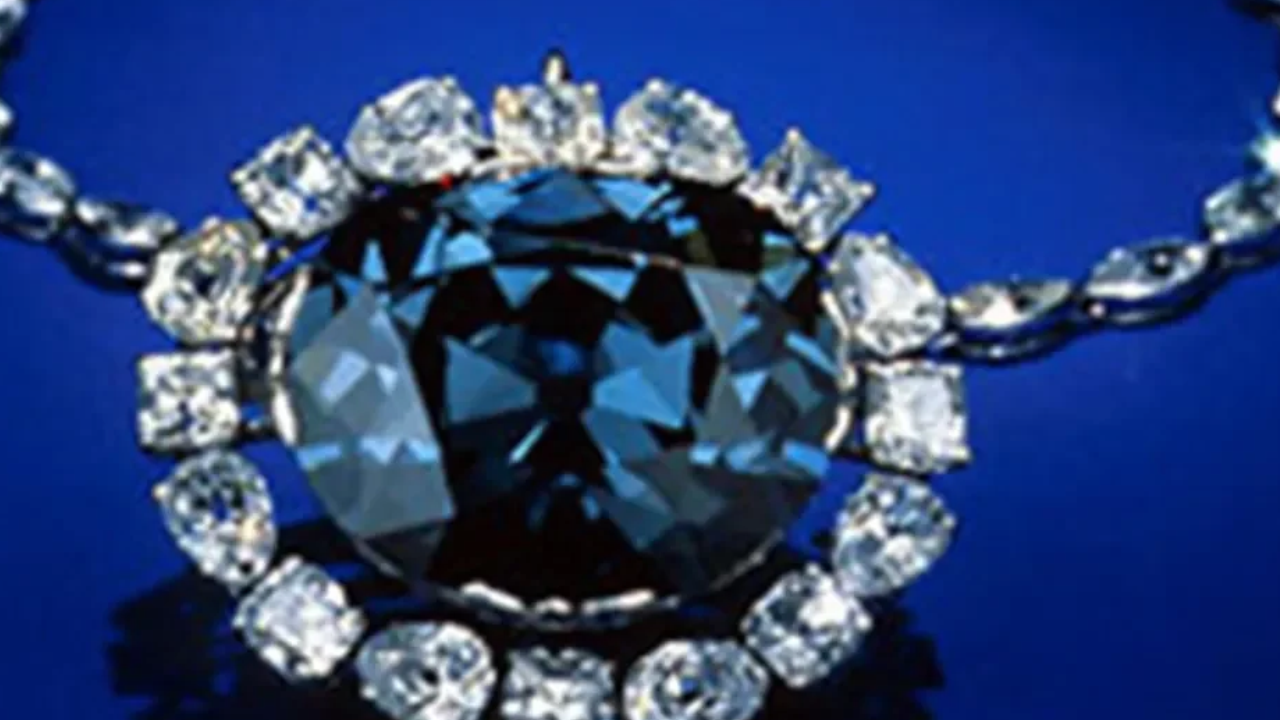
A priceless gemstone travelling across the country in an ordinary-looking parcel might sound like the plot of a film. But that is precisely how one of the world's most famous diamonds reached the Smithsonian Institution in 1958. Rather than arranging an elaborate security operation, American jeweller Harry Winston entrusted the 45.52-carat Hope Diamond to the US postal service, sending it from New York to Washington, DC, through registered mail. According to records from the Smithsonian's National Postal Museum and Smithsonian Institution Archives, the shipment cost $145.29, including insurance covering the diamond's estimated $1 million value. The package contained a gemstone with a history spanning centuries, royal ownership, extraordinary wealth and persistent rumours of a curse. Its unassuming brown-paper exterior offered little indication of what was inside. From Indian mines to European royalty The diamond's documented history can be traced to India, where it was discovered before 1668. It entered the French royal collection after being purchased by King Louis XIV. At the time, the stone weighed approximately 112 carats and was known as the French Blue. During the French Revolution, the diamond disappeared along with other royal treasures. It resurfaced in London in the early 19th century, having been recut into a smaller stone. By 1830, it belonged to British banker and gem collector Henry Philip Hope, whose family name eventually became associated with the diamond.After passing through several owners, the stone was purchased by American socialite Evalyn Walsh McLean in 1912. Her ownership helped turn it into a subject of public fascination, with stories about misfortune and a supposed curse becoming closely associated with the jewel. However, these accounts have never been established as fact. Jeweller Harry Winston acquired the diamond from McLean's estate in 1949, several years after her death. Nearly a decade later, he decided to donate it to the Smithsonian, hoping to help establish a national collection of precious gemstones. Why the diamond is so unusual Beyond its remarkable history, the Hope Diamond is considered exceptional for its size, colour and unusual physical properties. Weighing 45.52 carats, it is widely recognised as the largest known fancy deep-blue diamond. Its distinctive colour comes from trace amounts of boron within its crystal structure. The gemstone belongs to the rare Type IIb category of diamonds, which have semiconductor properties.It also displays an unusual optical effect. When exposed to short-wave ultraviolet light, the diamond emits a vivid red glow that can remain visible for several seconds after the light source is removed. This phenomenon, known as phosphorescence, adds to its scientific interest. The stone is displayed in a setting designed by French jeweller Pierre Cartier. It is surrounded by 16 white diamonds, featuring alternating pear-shaped and cushion-cut stones, while its necklace chain incorporates another 45 diamonds. A journey that became part of its legacy The Hope Diamond's arrival at the Smithsonian marked a new chapter in its long history. The institution placed it in its National Gem Collection, where it became one of the most recognisable attractions at the National Museum of Natural History in Washington, DC.Its journey also left behind an unusual historical artefact. The National Postal Museum preserves the original brown-paper mailing wrapper used to transport the diamond, offering a glimpse into how an object of extraordinary value was handled through an everyday postal service.Today, the Hope Diamond remains on display at the National Museum of Natural History. Once associated with royal courts and wealthy collectors, it now belongs to a public institution, where visitors can see both its remarkable craftsmanship and the centuries of history behind it. The story of its delivery remains one of the most unusual episodes in the history of precious gemstones: a world-famous diamond, worth a fortune, travelling to its permanent home in a modest postal package. Poll Vote & Share your view What aspect of the Hope Diamond fascinates you the most? Its size and colorIts mysterious historyIts unique optical properties 3k+ users shared opinion today 5k+ users already voted today 3k+ users shared opinion today Share Opinion
Hope Diamond was mailed in a plain brown package for just $145 in 1958
The Hope Diamond embarked on a remarkable journey in 1958 when it was sent as registered mail to the Smithsonian Institution for safekeeping. This precious gem, with its origins in India, has a captivating royal history. American jeweller Harry Winston generously donated it to the museum after obtaining it from Evalyn Walsh McLean's estate in 1949.
Read the full story at Times of India.