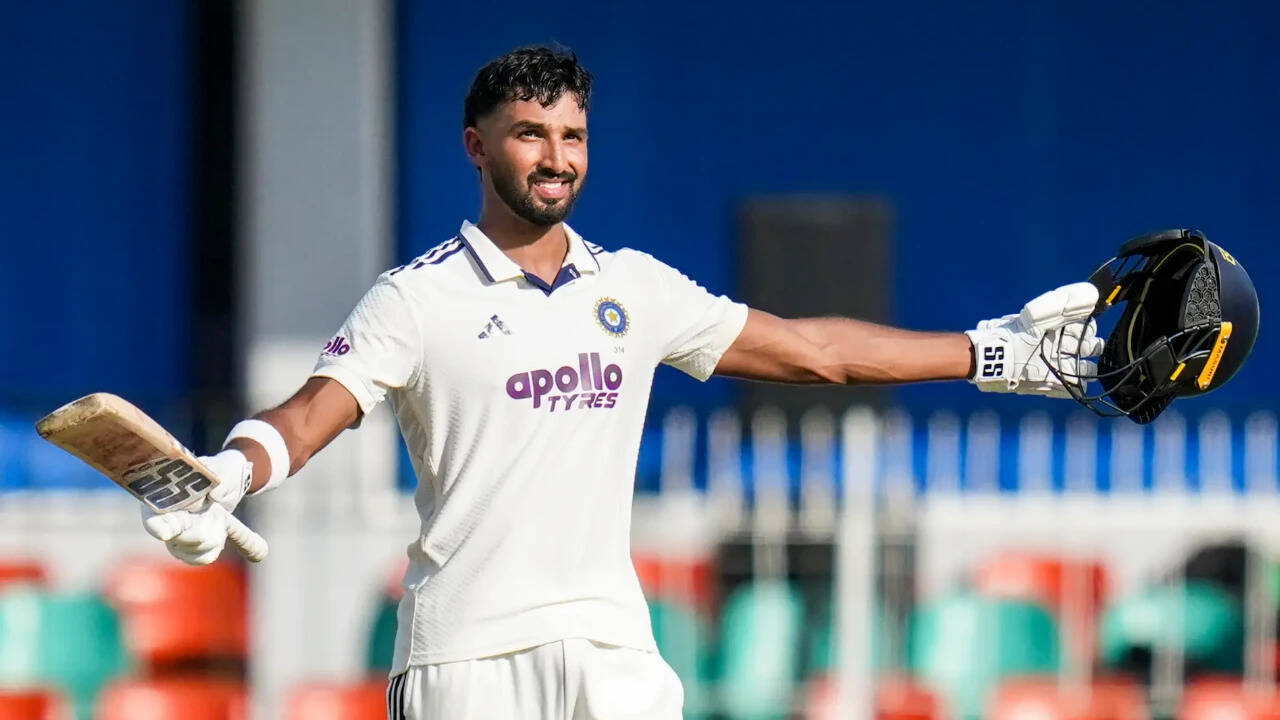
India's Devdutt Padikkal (PTI Photo) For a moment, Devdutt Padikkal could only stare in disbelief. One run short of a double-century, India's No. 3 was adjudged caught behind in contentious circumstances against New Zealand A in Lincoln. The dismissal ended a magnificent innings at 199, but not before the left-hander had sent a timely reminder of his ability to bounce back when it matters.After a disappointing outing against Australia A at home, Padikkal found his rhythm in the blustery conditions of New Zealand, producing a knock that could prove significant in his bid to strengthen his Test credentials.Ahead of India's two Test series against New Zealand, the 26-year-old spoke at length about a journey shaped by setbacks, self-doubt and evolution. From feeling underprepared for the challenge in Australia to rediscovering his game in Sri Lanka, Padikkal opened up about battling a prolonged illness in 2022, spending nearly two years trying to get back to his best, the technical adjustments he is making for New Zealand and the advice he received from KL Rahul.Excerpts:Q. How have your preparations been for the New Zealand Tests?It's been pretty good, to be honest. I've had a few sessions back home and played a couple of (India) A games against Australia A. Obviously, the conditions were different, but at the same time, it's important that you keep playing some red-ball cricket. Now, it's just about making a few adjustments, especially going to New Zealand, where it's going to be a different challenge compared to what we faced in Sri Lanka. Q. Could you elaborate on the "few adjustments"?The wind is something that's going to play a pretty major role, especially in Wellington. But at the same time, it's important that I don't make too many preconceptions. The India A games are key for us to really understand the conditions and get used to them as quickly as possible. So I'm trying not to look too much into it because it's very challenging to simulate what you would face there.Q. How much is video analysis a part of your preparations?I've watched a bit of the games that were played in New Zealand previously, and even the England series that took place there (2024). I think that was the last Test series that happened there [New Zealand hosted West Indies in December last year]. So I've watched a bit of that. But again, like I said, the conditions can be different when we go out there. It could be a different challenge for us, so for me, it's important that I adapt as quickly as possible.I practice things that I technically need to work on. I try to make sure that I'm playing the ball late, playing with the swing and trying to get those minute things right when I'm back home. Once I go out there, that's when I try to understand the conditions and then adapt to them.Q. From Dharamsala to Perth to Galle, you've had a roller-coaster journey in Tests. Are you pleased with your progress and returns in Sri Lanka?Every cricketer would have gone through something similar. They would have had that phase in their lives when they were trying to find answers. I think, for me, the last couple of years were about trying to understand where my game was at and what I needed to work on to really make sure that when I got that opportunity again, I was prepared.So that was the key for me. I feel that when I played that game in Perth, I was probably not ready. In terms of where my mindset was mentally and where my technique was, there were a lot of things I was still working on and still needed to get better at.Obviously, it was always going to be a challenging task to play that first game in Perth. I was up for it, and I was really excited about it. But now, looking back at it, I probably needed a lot more technical solidity to go out there and play against that level of bowling. Over the next two years, it was a phase in which I needed to understand that aspect of my game, try to figure out what I needed to do and how my game had to evolve to make sure that, eventually, when I got that opportunity in Sri Lanka, I was ready.Q. Was the need to level up a self-realisation or a result of conversations with seniors?I remember having a conversation with KL (Rahul) when I was in Australia about what I could do going ahead and what I needed to work on. The conversation was about just trying to evolve and getting better at your game every day.When you play at the highest level, it's easy to relax and think that you have made it or reached the pinnacle, that you don't need to work on too many things and just need to maintain that level. It's important to understand that everyone else around you is going to evolve. Everyone is constantly trying to get better. If you try to stay at the same level, it's going to cost you at the end of the day.So I think that's something that stuck with me. It was important that every game I played, regardless of whether it was at the Ranji Trophy level or the A team level, I performed better in the next game than in the previous one.That's how I looked at it. Every day that I went out to practise, it was important that I reminded myself to get better because it's not about maintaining the same level. It's about constantly upgrading.Q. Were you gutted to miss the England tour last year?100%. Overseas tours are always a great experience, especially for someone young like me. It was important that I could go on those tours and learn different ways of playing, different ways of batting in different conditions and just evolve my game that way. But I think everything happens for a reason. It was unfortunate that I missed out, but I'm glad that eventually I got that opportunity.Q. While elevating your red-ball game, you were also making the right noise in the white-ball circuit, with your List A consistency and outings with the Royal Challengers Bengaluru. How difficult is it to navigate different formats?It's definitely not easy. I think you have to compartmentalise a lot when you switch formats. At the Ranji Trophy level, you still have seven to eight days of break between formats. You have time to prepare and try to switch formats, and that makes it a little bit easier.But at the same time, it's important that you try to keep those aspects of your game separate as much as possible. If you try to mix red-ball cricket and white-ball cricket together, it doesn't bring you a lot of success.I've been through that phase where I've tried to keep my technique very stable across the two formats. It's not always been easy. I've reached a stage in my career now where I've figured out how I can adjust and change my technique just enough to make sure that there's a clear difference in how I bat in both formats. The formats have become so specialised and people have gone up so many notches in each format, it's important that you continue to evolve that way if you want to play the white-ball game as well as the red-ball game. It's not the easiest thing to do, but it's something that I'm proud to be able to do at the moment.Q. Is competition with a teammate, say Sai Sudharsan for the No. 3 spot, pressure or a privilege for you?I think it's become a part of every cricketer's life in India. Everyone understands that there is a lot of competition. I don't think anyone feels really hard done by when someone else is picked over them because, almost always, that person deserves it too.So that's how it's been in Indian cricket over the last few years. We have so many talented cricketers, and everyone deserves to be at the highest level. But at the end of the day, only 11 can play. So sometimes someone misses out. It's always going to be a hard thing for that player.Everyone understands that everyone deserves to be there, and everyone understands their jobs. For me, it's no different. I've really enjoyed the competition. I've always felt that it gives me added motivation and a boost, and that's how I've always looked at it. As long as I'm pushing myself to get better, I think I'll continue to play.Q. Looking back, was the bout of illness in 2022, tougher than any on-field challenge?That was definitely the most difficult part of my life so far. It felt like things were against me. I thought this was probably going to be the end of my cricketing career because when you're out of cricket in India for a period that long, even if you miss one season, it feels like everyone else is miles ahead of you. To not be at my best for close to two years definitely felt that way. Join conversation View All Comments → Share your thoughts in the comments Post Comment Be respectful · TOI community guidelines It definitely felt like I was not going to be able to get over this. But I'm really grateful and thankful to all the people who helped me through that phase: the doctors, the nutritionists and everyone who got me back to a stage where I could perform at the highest level again.That's the only thing I could think of when I was going through that phase. I just wanted to get healthy, get fit and make sure that I was playing cricket again. Eventually, once I got out of that phase, I was obviously doubly determined to get back to the stage where I felt I belonged.I think that was part of my journey, and it's something that I'm really grateful for experiencing because now I feel it's given me an added sense of gratitude whenever I get an opportunity to play for the country or my state. It makes me feel so blessed that I was able to get through that sickness and health issue and get back to playing on the field.
‘I thought my career was over’: Padikkal on toughest phase ahead of NZ Tests
As he prepares for the Test series versus New Zealand, Devdutt Padikkal reflects on his journey in cricket. He stresses the need for adaptability in adverse weather conditions and the value of video analysis in refining his technique. Discussions with seasoned players have played a crucial role in his development. Despite facing health challenges, he is focused on capitalizing on the opportunities that lie ahead.
Read the full story at Times of India.