Health
Pregnancy in the age of AI: Too much information is making mothers-to-be very anxious
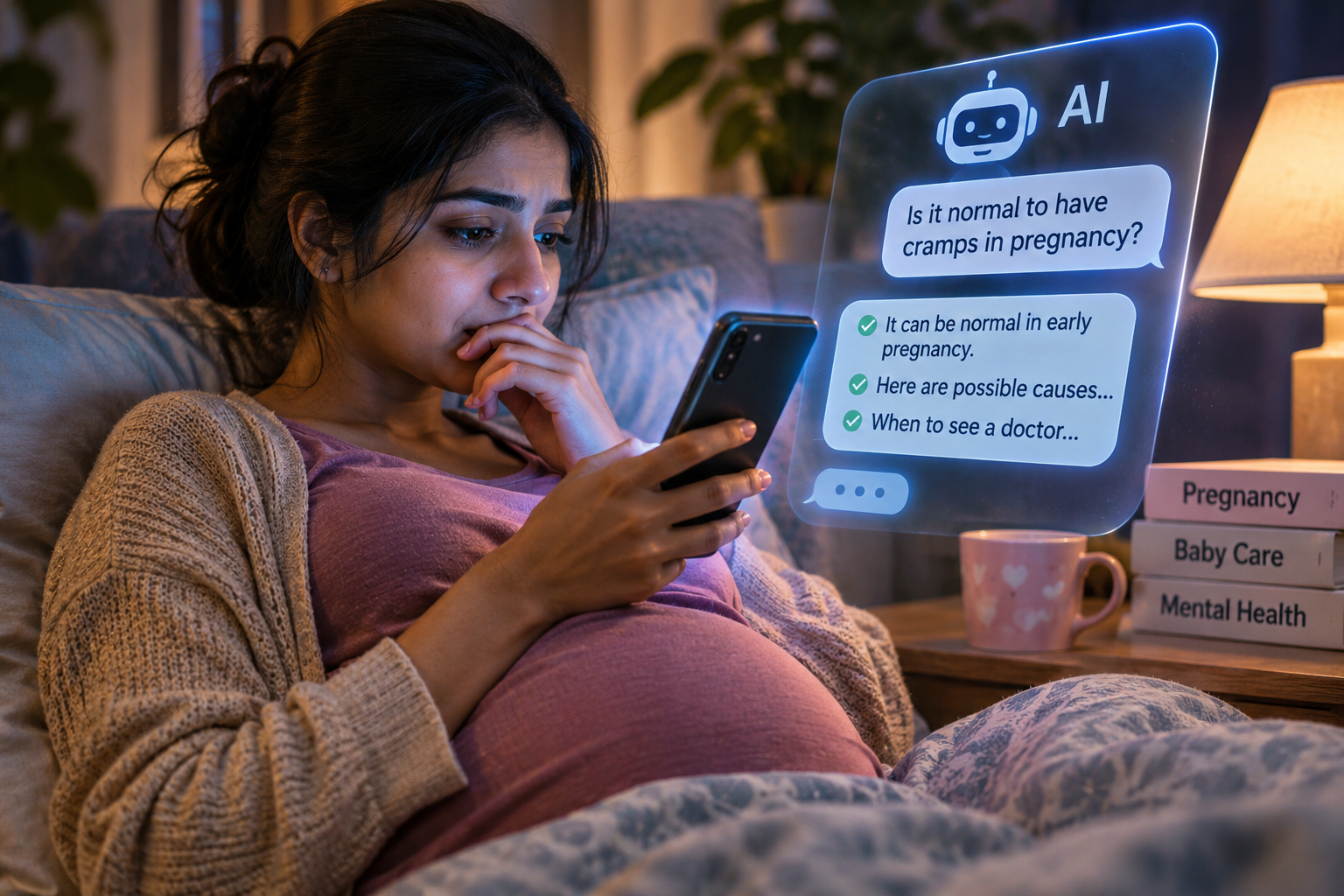
The abundance of information is too overwhelming for mothers-to-be At 2 am, when the baby hasn’t kicked as frequently as it did the previous evening, or when a headache refuses to go away, the temptation to seek an immediate answer is irresistible — and worse, handy. Just talk to your phone. Type symptoms into an AI chatbot, describe what you are feeling, ask whether it is normal, request possible explanations and follow up with more questions until you feel reassured.Sometimes, you get the reassurance you were looking for. But at most times these days, there’s a new discovery, a new medical term you’ve learnt, and there’s a lot more to worry about. Experts all over India have again started talking about the risks of expectant mothers relying too much on online research in the age of AI.The internet has made medical information readily available, social media has made pregnancy experiences shareable and generative AI has made the search for answers conversational.Unlike a search engine that directs users to a collection of links, an AI chatbot can sustain a conversation, explain unfamiliar medical terminology and respond to the same question repeatedly without impatience. For a woman trying to make sense of the physical and emotional changes of pregnancy, this can feel like a useful companion but it comes with risks. When information becomes an anxiety loop Dr. Kaishreen Khan, consultant obstetrician and gynaecologist, Motherhood Hospitals, Pune, says “Expectant women today have access to more health information than ever before but it’s not leading to better outcomes. Excessive online searching increases anxiety, creates confusion, and sometimes, affects important pregnancy decisions. Not all online information is medically accurate to begin with. And constantly searching for symptoms can make an otherwise normal pregnancy feel stressful.”The abundance of information is too overwhelming. The concern is not simply that AI may give inaccurate medical advice, but that the endless availability of answers may encourage a cycle of checking, reassurance-seeking and renewed anxiety.Pregnancy anxiety can involve persistent fears about the health of the baby, miscarriage, childbirth, medical complications, the mother's own health or whether she is doing enough to ensure a healthy pregnancy. While some apprehension is normal, anxiety becomes concerning when it is persistent, difficult to control and begins affecting sleep, relationships or everyday functioning. The search spiral: from curiosity to cyberchondria When the need to know becomes the need to check again, digital information can turn pregnancy's uncertainties into an exhausting cycle.The phenomenon has a name: cyberchondria, the escalation of health anxiety through excessive or repetitive online searches for medical information. It is particularly relevant to pregnancy, when the stakes feel unusually high and a woman may be monitoring bodily changes with a heightened sense of vigilance.A longitudinal study of 149 pregnant women, assessed across early, middle and late pregnancy, examined the risk factors and triggers for cyberchondria. Researchers found that health anxiety and sensitivity to anxiety were important risk factors, while concerns about motherhood and pregnancy acted as triggers for repeated online health searches. The study also explored the relationship between cyberchondria and fear of childbirth.A 2025 study, Being Pregnant in the Digital Age: Cyberchondria and Pregnancy Anxiety, involving 376 pregnant women, found that 77.1% reported using the internet to find answers to pregnancy-related questions.Dr Priyanka Sonawane, gynaecologist at Zynova Shalby Hospital, Mumbai, says, “Following unverified advice can also lead to confusion. Going for regular antenatal visits is essential, not reading up or asking AI chatbots about every symptom. One must have an open communication with the doctor and seek emotional support from family or experts, during pregnancy.The numbers reflect how deeply online information-seeking has become embedded in the experience of pregnancy.AI adds a new dimension to this habit. Unlike a conventional search engine, which directs a user towards links and articles, a chatbot can sustain an extended conversation. A woman can ask whether a symptom is normal, describe the duration, ask what else it might indicate, request a list of warning signs, and then ask follow-up questions about every possibility. The system can respond without impatience, judgement or the social awkwardness of asking a doctor what might feel like a trivial question.That accessibility is one of AI's strengths. But the same conversational quality may also make it easier for a worried person to remain in an information loop. Instead of closing the search, each answer may prompt another question. For someone already vulnerable to anxiety, the distinction between being informed and repeatedly seeking reassurance can become blurred.Dr Khan says, “Mild headache, abdominal discomfort, nausea or fatigue are common symptoms during pregnancy. However, when you search online, it’s likely to give you the worst case scenario too. Which then creates unnecessary fear.” So, now the mother has more headache, possibly more nausea.Another risk Dr Khan warns about is watching videos of difficult deliveries or pregnancy losses. “It can make expectant mothers very fragile.” Doctors say AI may give worst case scenarios leading to more anxiety among pregnant women International research on AI and pregnancy has largely focused on how women use chatbots, how much they trust them and whether these tools can improve maternal health. Here are some of the results summarized. How many women are using AI? A 2026 cross-sectional study of 423 pregnant women found that 54.4% used AI during pregnancy, with ChatGPT accounting for 64.3% of AI use. Usage was higher among women in the earlier weeks of pregnancy, first-time mothers and those with better digital health literacy. Can AI improve maternal health? The Rosie randomised clinical trial, published in JAMA Network Open in November 2026, followed 400 pregnant and postpartum women across 49 US states for 12 months. The multilingual AI chatbot received more than 30,000 questions, averaging 2.73 questions a day, with usage peaking at 10 pm. As many as 91% of users found its responses useful. However, the trial found no statistically significant improvement in maternal anxiety, depression, emergency room visits or postpartum check-up rates compared with the control group. Do women trust AI as much as their doctors? A September 2026 study published in Visuomenės sveikata, which surveyed 253 pregnant and postpartum women, found that 80.7% trusted AI recommendations that had been validated by a doctor. However, only 10.7% trusted AI as much as a physician, while more than 91% said direct medical oversight remained essential. Can AI help manage specific pregnancy complications? Smaller clinical trials suggest that AI may be useful when designed for specific medical needs. A controlled study at Kasr Al-Aini Maternity Hospital in Cairo, for instance, found that a chatbot designed to support women with pregnancy-induced hypertension improved adequate self-care practices from 24% to 72%. More information, more expectations In India, pregnancy anxiety often exists within a complex web of expectations about motherhood, family, nutrition, weight gain, delivery choices, breastfeeding and parenting. Advice may come from doctors, parents, in-laws, friends, WhatsApp groups, influencers and now AI.These sources can sometimes reinforce one another, but they can also contradict each other, leaving women unsure which advice to trust.Dhara Ghuntla, psychologist and psychotherapist, 7 Hills Hospital, says, “If women are constantly reading about complications, comparing pregnancy experiences and repeatedly checking symptoms in the age of AI, they will experience more stress, more anxiety even when everything is medically normal. This can also lead to sleep disturbances, which isn’t good during pregnancy.”In India, the situation is a bit peculiar. Studies suggest that while pregnant women are increasingly turning to AI for information and support, they also continue to place greater trust in doctors. AI may also be more effective when designed to support the management of specific medical conditions than when used as a general source of reassurance. Can AI help in certain situations, or does it simply become another source of false reassurance? AI is increasingly being explored as a maternal-health support tool, from explaining prenatal tests and managing gestational diabetes to breastfeeding guidance and postpartum support. Its accessibility is particularly attractive in settings where appointments are brief, specialist care is expensive, language is a barrier or women feel uncomfortable asking questions.Yet the evidence that AI chatbots can meaningfully reduce maternal anxiety remains inconclusive. A systematic review and meta-analysis published in 2026 examined six studies of AI chatbot interventions during pregnancy and postpartum.While individual studies reported improvements in knowledge, self-efficacy and other outcomes, the meta-analysis did not find a significant overall effect on anxiety or depression. Researchers concluded that larger, more rigorous studies were needed.Dr Khan especially worries about women comparing personal experiences with those shared online. “Every pregnancy is different. Hence, one woman’s symptoms, test results or delivery experience cannot predict what another woman will experience.”Another crucial thing that worries her is that currently social media is filled with pregnancy diet plans, exercise routines, supplements and even home remedies. “Though some information may be useful, advice that works for one woman may not be suitable for another. Following restrictive diets, taking supplements without medical advice, changing prescribed medication or attempting exercises without understanding individual health conditions can be very risky. Pregnant women with conditions such as gestational diabetes, high blood pressure or thyroid disorders will need timely attention.”A clinical trial published in JAMA Network Open in November 2026, involving 400 pregnant and postpartum participants in the US, compared access to a generative AI maternal-health chatbot with a control group receiving monthly children’s books. The study found no significant differences in anxiety or depression scores after 12 months.In exploratory analyses, greater chatbot engagement was associated with higher anxiety scores, although researchers cautioned that this could reflect reverse causation, with more anxious participants turning to the chatbot more frequently, rather than the chatbot causing anxiety.It is obvious by now that an information-oriented AI tool, on its own, is not sufficient to address maternal mental-health needs. The findings are important because they challenge the assumption that more information automatically translates into greater reassurance.Pregnancy anxiety is shaped by social support, financial pressures, previous pregnancy experiences, relationship dynamics and the fear of childbirth. AI may help women understand certain medical concerns, but it cannot address their underlying emotional or social causes. Join conversation View All Comments → Share your thoughts in the comments Post Comment Be respectful · TOI community guidelines Learning when to close the screen The challenge for doctors may increasingly be to understand how their patients are using digital information, rather than simply discouraging it.For instance, AI can be useful in explaining medical terms, helping women prepare questions for appointments and providing general information. But it cannot substitute for a clinical assessment ever.Pregnancy has always involved a degree of uncertainty that cannot be eliminated through knowledge or planning. The more important skill in this new digital pregnancy landscape is learning when to close the screen and when to allow a trusted human being to take over. You use AI every day. Now get your AI Quotient. Take the AIQ test Get the latest Lifestyle News and more. Download the TOI app.
Times of India·5 hours ago·9 min read