Health
Sri Narayani Hospital completes 125 kidney transplants in Vellore, honours doctors
Sri Narayani Hospital and Research Centre (SNHRC) celebrated the completion of 125 kidney transplant surgeries in Vellore. The event honored doctors, organ donors, and patients who benefited from the program. A. Catherine Saranya, Commissioner of Vellore Corporation, was the chief guest, while N. Balaji and associate directors Srinath and Srikanth Balaji attended.
The Hindu·5 hours ago·1 min read
Health
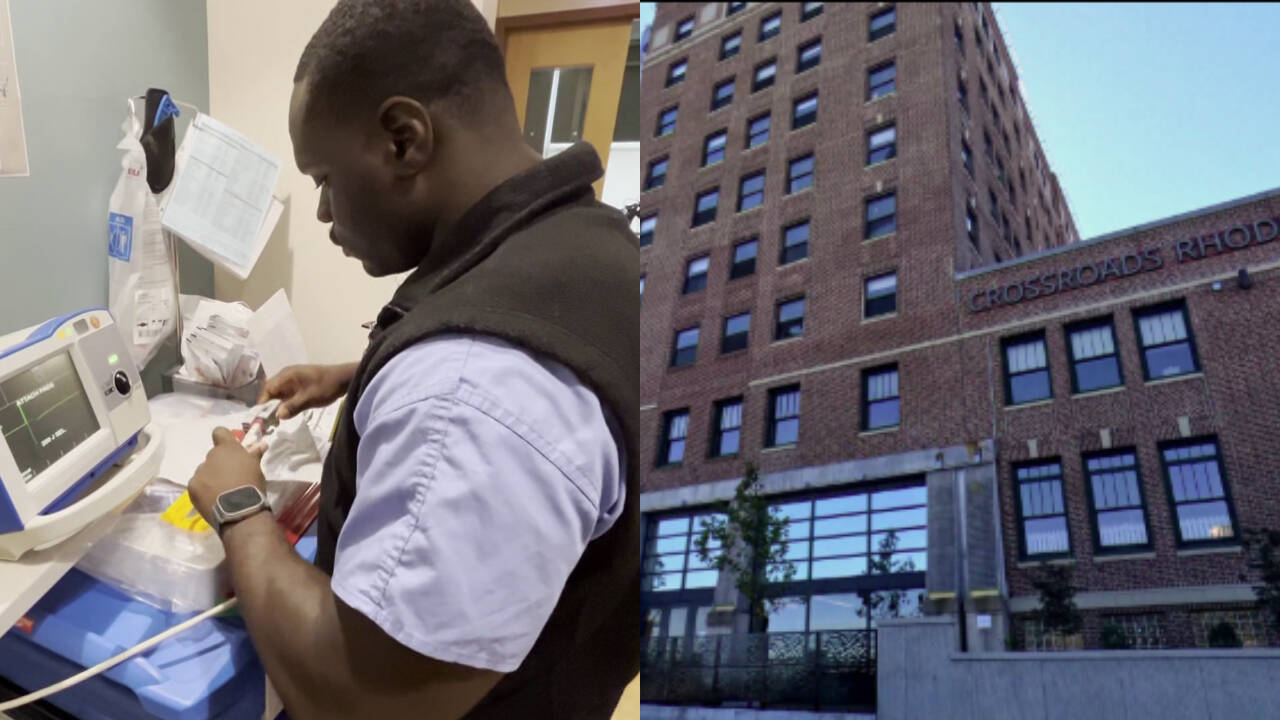
Nigerian immigrant once homeless at 13 becomes neuro ICU nurse in Rhode Island
Badaru’s story goes from a homeless teenager to a healthcare professional helping critically ill patients and now a mentor training the next generation of Rhode Island’s healthcare workforce. At 13, Usman Badaru arrived in Rhode Island from Nigeria with his father and older sister, expecting a new beginning but knowing little about how to navigate life in a new country. Instead, the family soon found themselves without a permanent home, relying on temporary shelter and help from local organisations. Decades later, Badaru works nights in the neuro ICU at Rhode Island Hospital, caring for critically ill patients and helping young people follow the same path into healthcare that changed his own life, states an online report by 10 WJAR. From uncertainty to a new direction According to the online report, Badaru's family settled in Providence after his father chose Rhode Island as their new home. Like many newly arrived families, they had limited knowledge of the systems surrounding housing, education and social services. For a short period, the family stayed at Crossroads, a Rhode Island organisation that provides support to people experiencing homelessness. There was even a brief stretch when they slept in their father's car before moving into family shelter. Assistance from Crossroads eventually helped them secure low-income housing, while other Rhode Island institutions helped the family understand and access opportunities available to them. After spending a year in public school, Badaru enrolled at the Rhode Island Nurses Institute Middle College Charter High School, commonly known as RINI. His older sister had been interested in nursing, and that interest helped spark his own ambition to enter the profession. Finding healthcare at RINI As per the report, established in 2011, RINI was created with a focused mission to introduce high school students to healthcare careers and give them practical steps towards becoming nurses and other healthcare professionals. For Badaru, the school provided something more valuable than an introduction to the profession. It gave structure to an ambition that might otherwise have remained little more than an idea.Through RINI, he discovered the healthcare field and began taking concrete steps towards a career in nursing. The experience also shaped his desire to eventually help other students find similar opportunities. RINI has since built a substantial alumni network, with more than 700 graduates now working across Rhode Island's healthcare workforce. From student to neuro ICU nurse Today, Badaru has spent three years working at Rhode Island Hospital, the state's largest hospital. He works the night shift in the neuro ICU, caring for patients who require intensive treatment, particularly those dealing with serious neurological illnesses, informs the report by 10 WJAR.His professional credentials include a Bachelor of Science in Nursing, registered nurse certification, Critical Care Registered Nurse certification and advanced emergency medical training. But experience is more than qualifications. His own experience has shaped the way he treats his patients and their families, especially during difficult times. Having experienced uncertainty and vulnerability himself, he brings a personal understanding of the circumstances that can shape people's lives. Giving the next generation a head start For several years, Badaru has returned to RINI to mentor students, dedicating dozens of hours to helping young people understand the healthcare profession and navigate the steps needed to enter it. His involvement has now grown further. He was recently appointed to the school's 12-member board of directors, giving him a role in shaping the institution that helped launch his own career, informs the report.As a board member, Badaru will contribute to discussions about curriculum, innovation and student support while helping ensure that the education offered reflects the realities of modern healthcare. He will also serve as a bridge between the school and the wider medical community. For RINI, his return represents more than the success of one former student. It demonstrates how education can create a cycle in which opportunity is passed forward. A Trip that Completes the Circle Badaru’s story goes from a homeless teenager to a healthcare professional helping critically ill patients and now a mentor training the next generation of Rhode Island’s healthcare workforce. He remembers the people and institutions who brought stability to his family and gave him a means into nursing. His work with RINI allows him to repay that support in a practical way: by helping students turn ambition into action.Images Courtesy: 10 WJAR
Times of India·6 hours ago·4 min read
Health
Quebec family transformed pesticide-treated yard into habitat with 300 trees
The once-sterile lawn has given way to flower and vegetable gardens, a wet meadow and a pond. More than 300 trees and shrubs now cover the property, with roughly 80 per cent of the vegetation made up of native species. What began as an ordinary suburban backyard in Quebec has, over the course of decades, become something far less conventional and far more alive. When Chris and Danielle Adam bought their property in Carignan in 1987, the yard was dominated by a pesticide-treated lawn, an above-ground swimming pool and a scattering of trees. Fifteen years of patient restoration later, the same space had ponds, gardens, wetlands and hundreds of native plants, creating a miniature ecosystem in the middle of suburbia. Today, the family’s backyard covers just under half a hectare and has become a refuge for wildlife, as well as a long-running family project involving their two sons, Stewart and Wilson, states an online report by the Canadian Wildlife Federation. Letting nature reclaim the yard According to the report, the transformation was gradual rather than dramatic. Instead of maintaining the property as a conventional manicured garden, the Adams allowed parts of it to develop more naturally, while deliberately introducing native vegetation and features that could support wildlife.The once-sterile lawn has given way to flower and vegetable gardens, a wet meadow and a pond. More than 300 trees and shrubs now cover the property, with roughly 80 per cent of the vegetation made up of native species, adds the online report. If we go by the Canadian Wildlife Federation, that diversity has changed the backyard's inhabitants as much as its appearance. Insects, leopard frogs and toads are drawn to the flowering areas and meadow, while evergreens provide shelter for birds and small mammals throughout the year. The pond has become another centre of activity, attracting aquatic insects and amphibians and creating a food source for birds. A backyard built for wildlife In an interview with the Canadian Wildlife Federation, Adams said that they have designed much of the property around the needs of local species. Fruit-bearing shrubs and vines, including dogwood, cranberry and Virginia creeper, provide nesting cover during spring and food later in the year, the report states.The results are visible in the birdlife. Seven species nested on the property in a recent year, including cardinals, grackles, house wrens, catbirds, song sparrows, tree swallows and great crested flycatchers. The wider animal population is just as varied. Foxes, deer, rabbits, moles and even coyotes have found their way into the landscape, alongside the frogs, insects and smaller creatures that form the foundation of the backyard ecosystem. Why native plants matter According to the report, native vegetation has been central to the project. Plants that evolved in the region are generally better adapted to local soil, weather and wildlife, making them more resilient while providing food and shelter suited to species that have evolved alongside them. The approach also challenges the idea that a healthy suburban yard needs to be perfectly trimmed. Dead trees, fallen branches and patches of uncut grass can all provide valuable habitat, even if they appear untidy by conventional landscaping standards. For the Adams, those elements have become opportunities to show neighbours how a less manicured garden can serve a much larger purpose.Imagec Courtesy: Canadian Wildlife Federation
Times of India·6 hours ago·3 min read