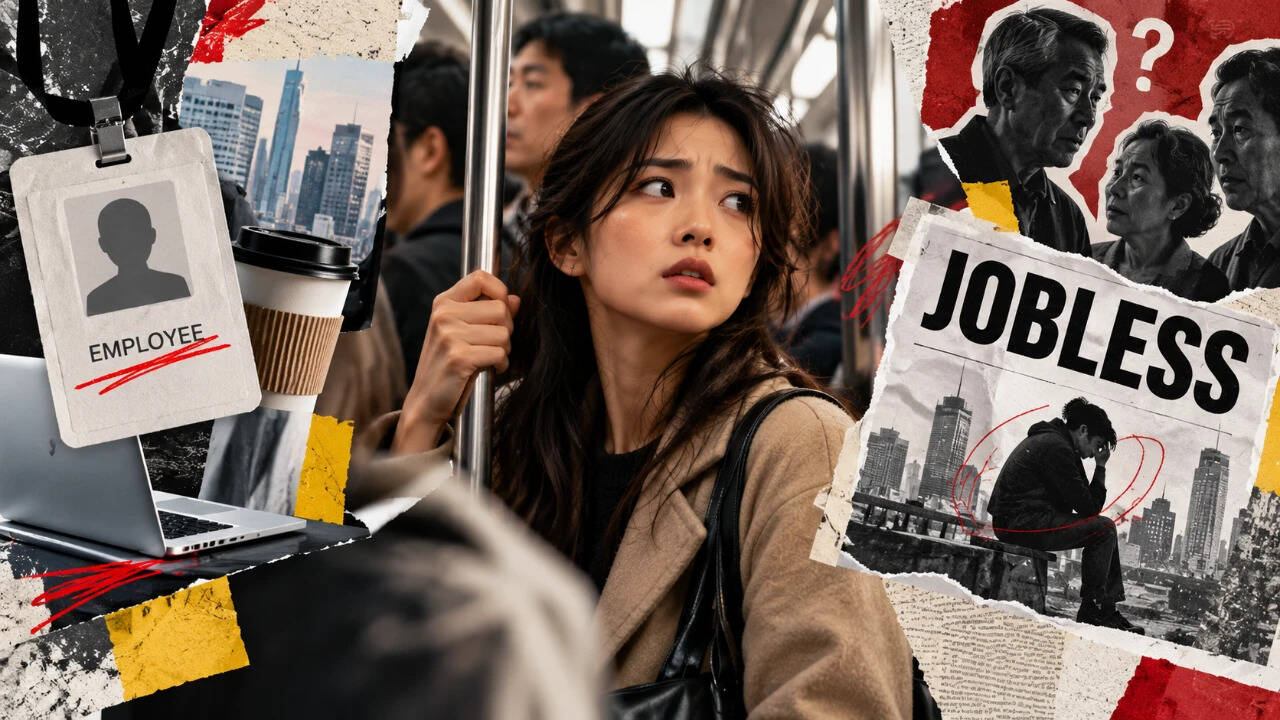
China's unemployed are pretending to go to work every day, here's why Tired of relatives asking, “So, where are you working now?” Some young Chinese adults have found an unusual way to dodge the question — getting dressed, leaving home on time and heading out for the day.But there is one catch: they have no workplace to report to. Instead, they spend their days in libraries, parks, cafes or shopping malls, all while keeping their unemployment under wraps.Their workplace may be make-believe, but the pressure to look employed is very real.For 32-year-old Coco Li, even a photograph of lunch nearly gave away the truth. A former employee of a Chinese state-owned property firm told Reuters that she was about to post a picture of a home-cooked meal in her family group chat when she stopped herself.Sharing it could invite an obvious question from her mother: why was she at home instead of work?Li had quit her job more than six months earlier, citing a heavy workload and little recognition. But telling her family about her unemployment was not something she wanted to do. Like many others facing a difficult job market, she chose to keep up the appearance of being employed, partly to avoid the worry and pressure that would follow an admission that she was out of work. "She would fall into an endless cycle of anxiety and eventually pass that anxiety on to me," Li said of her mother. Her concern, she added, "couldn't really solve my problem," she further told Reuters. Nowhere to report, everywhere to go Li's experience is part of a trend that has gained considerable attention on Chinese social media. People are sharing advice on how to fill working hours without a job, avoid questions from relatives and maintain the appearance of having somewhere to be every morning.The scale of the conversation is striking. Posts about pretend-workers and their daily routines have attracted more than 70 million views on RedNote, an Instagram-like app, and 610 million views on Douyin, China's TikTok. Related hashtags on Weibo, which is similar to X, have received up to 320 million views.Behind the online discussions lies a labour market in which securing employment has become increasingly difficult. Analysts see the trend as a reflection of the pressures facing workers in an economy increasingly dependent on strong exports.Monday's third-quarter data showed manufacturers grappling with fierce competition by cutting prices and reducing payrolls, while expecting the employees who remain to shoulder heavier workloads.The strain is not limited to manufacturing. China's prolonged property market crisis and tight local government finances have affected jobs and incomes, while automation and the rapid adoption of artificial intelligence have added to employment pressures. A train to … ? For those pretending to have jobs, the challenge is not just concealing unemployment but also finding somewhere to spend the day.Social media posts describe people moving between parks, libraries, cafes and shopping malls, keeping themselves occupied until it is time to return home. The routines recall those of salarymen in South Korea and Japan who concealed their joblessness during the Asian financial crisis of the 1990s.Li follows a similar routine when her parents come to visit.The crowds in places that might otherwise seem quiet on a weekday have also caught the attention of people experiencing the same predicament. Zhang, a 36-year-old visual effects producer who lost her job in AI-driven redundancies in August, gave only her surname."I never would have believed the library would be completely full on a weekday," she said.Online, the stories range from practical guides to personal accounts of unemployment. Some users wonder whether strangers around them are also pretending to be at work. Others explain why they have chosen to hide their circumstances and describe the emotional toll of keeping up the act.One post, titled "Day 30 of unemployment: a month pretending to work," documents a month of joblessness alongside 80 unsuccessful job applications. And the pretence gets harder For Susan Sun, 28, keeping her unemployment private has become a daily exercise in managing time and appearances.Sun has concealed her layoff from an internet company since late last year. The arrangement became more difficult in May, when her mother and stepfather moved from their smaller hometown to live with her in the megacity of Chongqing as they looked for work.With her parents at home, Sun has to leave before 9 am and return after 6 pm, maintaining the rhythm of a working day even though she no longer has a job.She gets by on monthly unemployment benefits of 1,864 yuan ($278) and the remaining money from her severance package. Sun says she is content to live on little and not work. The pressure comes instead from her parents and their concerns about her finances."They pass their anxiety on to me, through subtle, insistent expressions and tone of voice," she said.The concern becomes particularly apparent when they urge her to save money because "the economy is bad."For Sun, therefore, the difficulty is not simply finding a way to occupy her time. It is also avoiding conversations that turn her financial circumstances into a source of anxiety within the family. Keeping up appearances to keep the peace The decision to hide unemployment can have consequences beyond individual households. Diana Fu, an associate professor of Chinese politics at Cornell University, said pretending to go to work gives people a way to save face and could also help defuse collective discontent.She said the practice helps preserve social stability as Beijing presses ahead with automation and its technological competition with the US."Pretend-workers are helping the Chinese government to stave off the hard choice between leaping ahead in automation and protecting job security, which is so essential to the social contract," she said.For those involved, however, the arrangement is also a way of managing the expectations of family members at a time when work is becoming harder to find.The pretence may offer temporary relief from difficult questions, but maintaining it requires time, effort and money — resources that can become increasingly scarce during unemployment.Financial pressure could eventually make it harder for unemployed people to continue concealing their circumstances. Yige Dong, an assistant professor of sociology at the University at Buffalo, said that China's social safety net is relatively thin compared with the support systems available in Japan and South Korea during the 1990s.
No job, but still 9-to-5: Why China's unemployed are pretending to go to work every day
A growing number of young adults in China are pretending to go to work, cleverly hiding their unemployment by loitering in busy public spaces. Concerned about family inquiries, these individuals engage in a digital discourse about their plight on social media. The economic climate forces them to juggle family expectations with the reality of their jobless status, illustrating the daunting struggle between financial pressures and social facades.
Read the full story at Times of India.