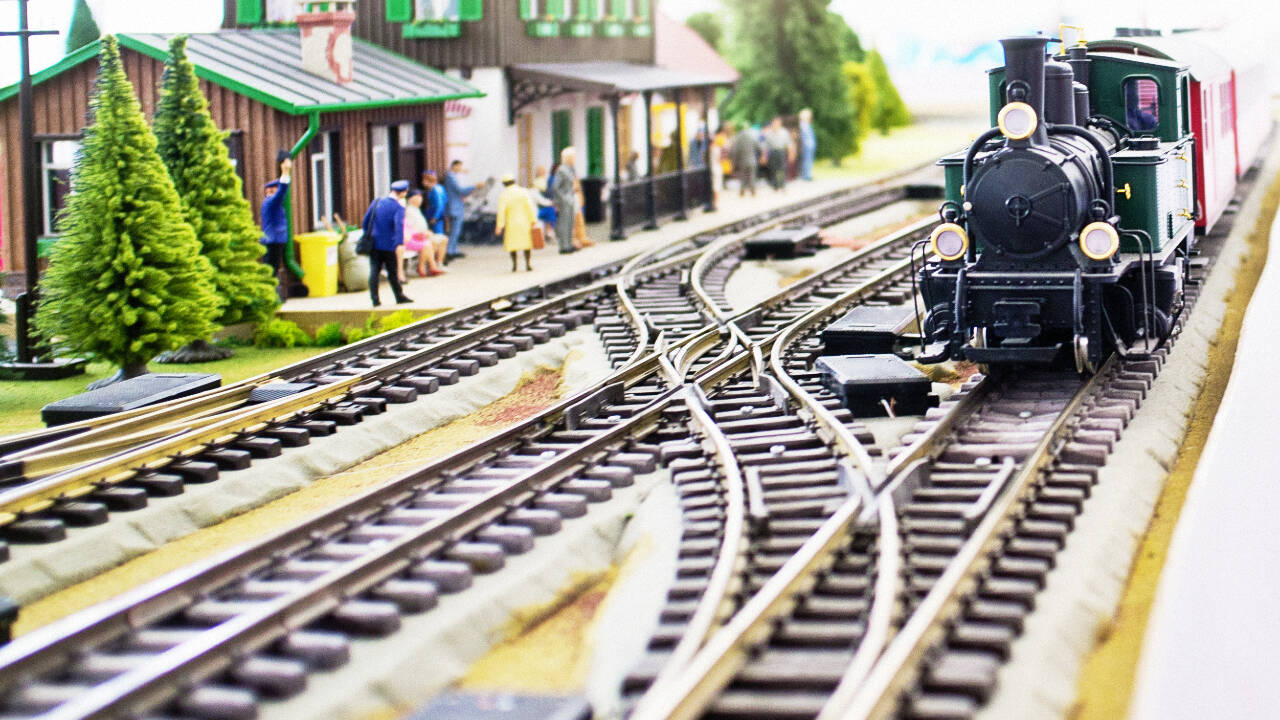
Oregon hobbyist Ed St. John’s backyard railway attracted volunteers, laying the foundations for a remarkable miniature railroad. What began as one man's backyard hobby in Southern Oregon has grown into a sprawling railway landscape where tiny trains travel through thousands of acres. According to the official website, Train Mountain is far removed from the idea of a garden railway: its 32 miles of 7.5-inch-gauge track wind across 2,200 acres, creating what the Guinness Book of World Records recognises as the world's longest rideable miniature hobby railway. Scroll down to read its history and what makes it a rare one. A backyard dream takes shape According to the website, the story began with Oregon hobbyist Ed St. John, who started building a railroad in his backyard. His project, called the Over-The-Hill Live Steamers, soon attracted volunteers from nearby Medford. The arrangement was simple: if St. John supplied the materials, enthusiasts were happy to make the journey and help build the railway.The original line eventually became the Klamath and Western loop, preserving the roots of what would become a much larger railway operation.Neighbour Quintin Breen, who had spent much of his life fascinated by trains, soon learned about St. John's project. Rather than simply admire it, Breen began purchasing land next to the existing railroad with an ambitious idea: create a much bigger miniature railway, states the website. In 1992, the two railroads were connected. Breen later acquired St. John's property, bringing the original backyard railway into what would become Train Mountain. From hobby railroad to railway landmark As the property expanded, so did the railway. By 2000, the operation had become substantial enough to host a gathering of the International Brotherhood of Live Steamers, an organisation involved in establishing standards and promoting the miniature railway hobby.Nearly 100 trains arrived for that event, revealing the potential of Train Mountain as a destination for railway enthusiasts. Breen eventually developed the idea of making the gathering a recurring event, leading to the Train Mountain Triennial.Held every three years, the meet has grown into a major international gathering. Recent editions have attracted more than 1,000 people, with participants bringing trains from countries including Germany and Australia, explains the website data. A railway built around history Today, Train Mountain Institute oversees the 2,200-acre property as a nonprofit organisation dedicated to railroad education and history. Its miniature railway stretches for more than 32 miles, while the Train Mountain Museum houses more than 50 full-sized rail cars, maintenance-of-way equipment and other railway artefacts.Visitors can experience the sprawling property from the tracks themselves, travelling aboard trains built at one-eighth scale. Those who prefer a slower exploration can also walk through parts of the grounds.The experience combines the intimacy of a hobby railway with the scale of a major rail museum, turning an enthusiast's backyard experiment into a destination built around the history, mechanics and culture of railroading, adds the website data. Keeping the original spirit alive The railway's operation is supported by several nonprofit organisations and a large community of volunteers. Train Mountain Railroad members help maintain the property, operate the museum and organise regular meets, while Train Mountain Institute oversees the broader educational mission.Meanwhile, the Klamath & Western Railroad continues to operate on the original loop created by St. John. During summer Saturdays, it carries on the tradition of offering public rides and operates a small lunch stand.Image Courtesy: istock
Oregon backyard hobby grew into world's longest miniature railway, 32 miles
Oregon hobbyist Ed St. John’s backyard railway attracted volunteers, laying the foundations for a remarkable miniature railroad. What began as one man's backyard hobby in Southern Oregon has grown into a sprawling railway landscape where tiny trains travel through thousands of acres. According to the official website, Train Mountain is far removed from the idea of a garden railway: its 32 miles of 7.5-inch-gauge track wind across 2,200 acres, creating what the Guinness Book of World Records recognises as the world's longest rideable miniature hobby railway. Scroll down to read its history and what makes it a rare one. A backyard dream takes shape According to the website, the story began with Oregon hobbyist Ed St. John, who started building a railroad in his backyard. His project, called the Over-The-Hill Live Steamers, soon attracted volunteers from nearby Medford. The arrangement was simple: if St. John supplied the materials, enthusiasts were happy to make the journey and help build the railway.The original line eventually became the Klamath and Western loop, preserving the roots of what would become a much larger railway operation.Neighbour Quintin Breen, who had spent much of his life fascinated by trains, soon learned about St. John's project. Rather than simply admire it, Breen began purchasing land next to the existing railroad with an ambitious idea: create a much bigger miniature railway, states the website. In 1992, the two railroads were connected. Breen later acquired St. John's property, bringing the original backyard railway into what would become Train Mountain. From hobby railroad to railway landmark As the property expanded, so did the railway. By 2000, the operation had become substantial enough to host a gathering of the International Brotherhood of Live Steamers, an organisation involved in establishing standards and promoting the miniature railway hobby.Nearly 100 trains arrived for that event, revealing the potential of Train Mountain as a destination for railway enthusiasts. Breen eventually developed the idea of making the gathering a recurring event, leading to the Train Mountain Triennial.Held every three years, the meet has grown into a major international gathering. Recent editions have attracted more than 1,000 people, with participants bringing trains from countries including Germany and Australia, explains the website data. A railway built around history Today, Train Mountain Institute oversees the 2,200-acre property as a nonprofit organisation dedicated to railroad education and history. Its miniature railway stretches for more than 32 miles, while the Train Mountain Museum houses more than 50 full-sized rail cars, maintenance-of-way equipment and other railway artefacts.Visitors can experience the sprawling property from the tracks themselves, travelling aboard trains built at one-eighth scale. Those who prefer a slower exploration can also walk through parts of the grounds.The experience combines the intimacy of a hobby railway with the scale of a major rail museum, turning an enthusiast's backyard experiment into a destination built around the history, mechanics and culture of railroading, adds the website data. Keeping the original spirit alive The railway's operation is supported by several nonprofit organisations and a large community of volunteers. Train Mountain Railroad members help maintain the property, operate the museum and organise regular meets, while Train Mountain Institute oversees the broader educational mission.Meanwhile, the Klamath & Western Railroad continues to operate on the original loop created by St. John. During summer Saturdays, it carries on the tradition of offering public rides and operates a small lunch stand.Image Courtesy: istock
Read the full story at Times of India.